


Silver Torch Cactus For Sale
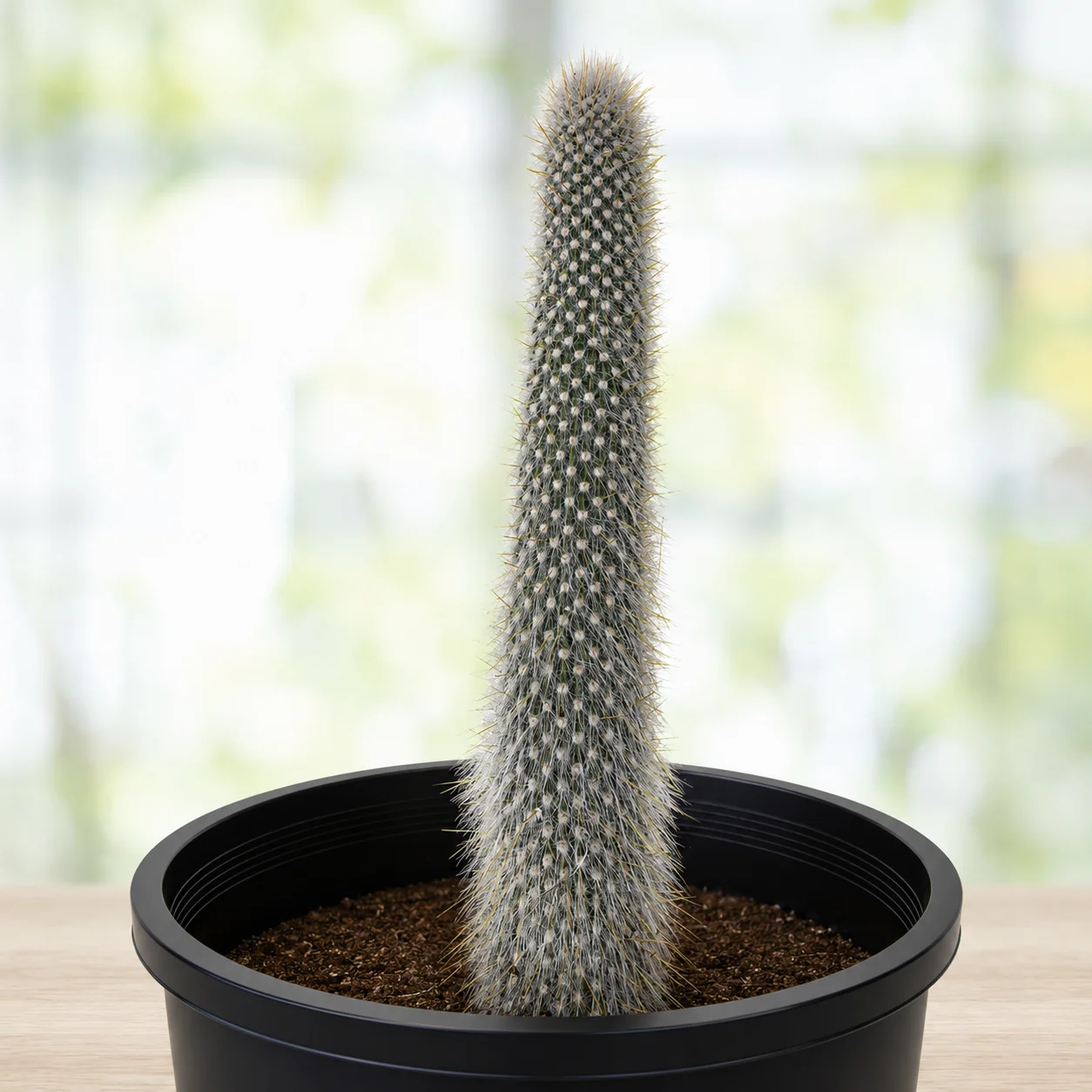
The Silver Torch Cactus (Cleistocactus strausii) is a slender columnar cactus wrapped in such dense white spines that its green stems appear almost silver from a distance. Young plants rise as narrow upright columns, while established specimens can produce additional stems from the base, gradually developing into an impressive cluster of silvery vertical growth.
Native to Bolivia, this species combines an elegant columnar form with one of the most recognizable spine coverings among cultivated cacti. Mature plants add another striking feature: narrow rose-red to reddish tubular flowers that emerge directly from the silver-white stems.
A Silver Torch Cactus for sale is particularly suited to collectors looking for height, texture, and strong visual contrast without the massive proportions of some other columnar cacti.
Cleistocactus strausii — The True Silver Torch Cactus
The botanical identity behind the common name is:
Cleistocactus strausii
Kew recognizes Cleistocactus strausii as an accepted species in the cactus family, Cactaceae, and records its native range in Bolivia, specifically Tarija.
Its natural growth is described as a succulent shrub associated primarily with desert or dry shrubland environments.
Several older botanical names exist for the species, but Cleistocactus strausii remains the accepted name and the most useful identification for buyers seeking the familiar silver-white columnar cactus.
Why Does Silver Torch Cactus Look Silver?
The stem itself is green.
Its famous silver appearance comes primarily from the dense covering of fine white spines distributed across the ribs.
These numerous short spines visually overlap, masking much of the green stem beneath them and creating a soft silver-white surface when the plant is viewed from a distance.
That appearance becomes especially effective when several stems grow together.
The result is very different from a blue or glaucous cactus whose color comes primarily from the stem surface itself.
With Silver Torch Cactus, the spines create the silver.
This distinction helps explain both the plant’s unusual texture and its appearance in strong light.
Tall, Slender Growth Without a Heavy Silhouette
Silver Torch Cactus develops vertically.
Rather than forming a broad barrel or an extremely thick trunk, it produces comparatively slender cylindrical stems that remain upright as they gain height.
RHS describes established plants reaching approximately 1–1.5 meters under its referenced cultivation conditions, with mature plants branching from the base.
This growth habit gives the species a different visual effect from heavier columnar cacti.
A single young stem creates a clean vertical accent.
Several developed stems create a clustered arrangement resembling a group of silver torches rising together.
For growers with limited horizontal space but room for height, that narrow architecture can be particularly useful.
How to Recognize a Silver Torch Cactus
Look for the combination of characteristics rather than relying on color alone.
A typical Cleistocactus strausii develops:
- slender upright cylindrical stems;
- numerous narrow ribs;
- densely positioned areoles;
- extensive short white spination;
- an overall silver-white appearance;
- additional stems emerging around the base as the plant develops;
- narrow reddish flowers on sufficiently mature growth.
Young specimens may consist of only one or a few stems.
That does not mean they will permanently retain a solitary form.
Basal branching becomes increasingly important to the appearance of established plants.
Choosing a Silver Torch Cactus
Different growth stages offer different advantages.
Single Stem or Cluster?
A younger single-stem specimen gives you the opportunity to watch the plant develop from a simple column into a more complex specimen.
A multi-stem plant provides greater immediate fullness.
Neither is necessarily superior. They simply represent different stages of development.
Consider Stem Height
Shorter plants are easier to position and handle.
Taller specimens provide more immediate vertical impact but require increasing attention to container stability.
Examine the Silver Coverage
Dense white spination is one of the defining features of Cleistocactus strausii.
Natural differences in spine density, age, and growing conditions can influence exactly how white or silver an individual plant appears.
Think About Vertical Space
This species is naturally upright.
Consider the space above the plant rather than judging its requirements only by the diameter of its current pot.
Verify the Actual Specimen
Exact height, number of stems, container size, rooting status, propagation method, current flowering status, and whether product photographs show the exact specimen are inventory-specific details.
These should be confirmed from the individual product listing.
The Flowers Create an Unexpected Contrast
Silver Torch Cactus is primarily grown for its white-spined stems, but mature plants can produce an entirely different kind of display.
RHS describes tubular rose-red flowers approximately 8 cm long, appearing along the stems during summer.
Their shape is characteristic of Cleistocactus.
Rather than opening into the broad, funnel-shaped flower many people expect from a cactus, the blooms remain comparatively narrow and tubular.
The effect is particularly striking because saturated reddish flowers emerge directly against the pale silver-white surface of the stems.
Flowering depends on maturity and growing conditions.
A young specimen should therefore be selected for its columnar form and spine character rather than with the expectation of immediate blooms.
How Silver Torch Cactus Develops With Age
A young plant and an established Silver Torch can look considerably different.
Early growth emphasizes the individual column.
As the cactus matures, additional stems can emerge around the base. Those stems continue growing upward alongside the original growth, gradually creating a clustered specimen.
The basic design remains consistent—slender silver columns—but the visual density increases.
This is one reason the species works particularly well as a long-term specimen.
It does not need to become enormously thick to become more impressive.
Instead, height and multiplication of stems build the mature architecture.
How to Grow Silver Torch Cactus
Light
Provide abundant light.
RHS recommends full light for Cleistocactus strausii, and strong light helps maintain sturdy, compact columnar development.
A plant previously grown under greenhouse shade or otherwise protected conditions should still be introduced gradually to substantially stronger direct sunlight.
Acclimation reduces the risk of sun damage to tissue that developed under lower light.
Soil & Drainage
Use a well-draining cactus growing medium.
RHS specifically lists well-drained conditions for the species.
The root zone should not remain saturated for extended periods, and containers should have functional drainage openings.
A porous substrate is particularly useful during cooler periods when evaporation and plant water use are reduced.
Watering
Water according to active growth and actual substrate conditions rather than following a rigid calendar.
During the growing period, provide appropriate moisture and allow the growing medium to dry sufficiently between waterings.
When temperatures decrease and growth slows, reduce unnecessary moisture.
The exact interval will vary with light, temperature, airflow, container size, plant size, and substrate composition.
Good drainage and an appropriate wet-to-dry cycle matter more than an arbitrary number of days between waterings.
Silver Torch Cactus in Containers
The narrow footprint of Cleistocactus strausii makes it particularly effective as a container-grown columnar cactus.
A young plant can provide considerable vertical interest without immediately requiring an oversized pot.
As the cactus becomes taller or develops multiple stems, however, stability becomes increasingly important.
A suitable container should:
- provide functional drainage;
- accommodate the root system without being unnecessarily oversized;
- remain stable as the stems gain height;
- allow enough room for developing basal growth.
Container cultivation is also useful where seasonal temperatures make permanent outdoor planting unsuitable.
Outdoor Growing & Landscape Use
In appropriate climates, Silver Torch Cactus can provide an unusual vertical accent in cactus and succulent landscapes.
Its pale surface contrasts particularly well with darker green, blue-green, and reddish plants.
The species can work as:
- a vertical specimen;
- part of a cactus grouping;
- a textural contrast in xeric planting;
- a container focal point;
- a repeating architectural element.
RHS classifies the species as requiring well-drained conditions and notes limited cold tolerance rather than broad freeze hardiness.
Growers in colder regions should therefore plan for appropriate protection rather than assuming that its Bolivian origin makes it universally frost tolerant.
Silver Torch Cactus vs. Other White-Haired Cacti
Several cactus species develop white hairs, wool, or pale spines, so a silver appearance alone is not enough for identification.
Silver Torch Cactus is characterized by the combination of slender upright stems, dense short white spines, basal clustering, and the growth structure of Cleistocactus strausii.
This distinguishes it from much heavier or woollier columnar species whose white covering may consist of longer hair-like structures.
Botanical identification becomes particularly important when purchasing young plants, since immature specimens may not yet display their eventual size or branching habit.
Look for Cleistocactus strausii rather than relying solely on a descriptive name such as “white cactus” or “silver cactus.”
Natural Variation Between Silver Torch Cacti
Individual plants naturally differ.
Variation can occur in:
- stem height;
- stem thickness;
- number of basal stems;
- spine density;
- exact silver-white appearance;
- rib development;
- growth direction;
- overall symmetry;
- minor cosmetic markings.
Age is another major source of variation.
A young solitary column will naturally look much simpler than an established cluster containing several tall stems.
Exact dimensions, number of stems, pot size, rooting status, and current flowering condition should therefore come from the individual product listing.
A Columnar Cactus Defined by Texture
Silver Torch Cactus demonstrates how dramatically spines can change the visual identity of a cactus.
Beneath them is a green, ribbed column.
Above them appears something entirely different: a slender silver-white torch whose surface seems almost soft until viewed closely.
As additional stems emerge and gain height, that effect multiplies. Mature plants can then introduce rose-red tubular flowers directly against the pale spination, creating one of the species’ most memorable contrasts.
For collectors interested in columnar cacti, Cleistocactus strausii offers a combination that is difficult to confuse once properly identified: slender vertical growth, dense silver-white spines, basal clustering, and vivid tubular flowers at maturity.
Choose a Silver Torch Cactus when you want vertical structure with a lighter, more textural presence than a conventional green columnar cactus.
Frequently Asked Questions About Silver Torch Cactus
What is the scientific name of Silver Torch Cactus?
Silver Torch Cactus is Cleistocactus strausii, an accepted species in the family Cactaceae.
Where does Silver Torch Cactus come from?
Cleistocactus strausii is native to Bolivia. Kew records its native range specifically in Tarija.
Why does Silver Torch Cactus look white?
The cactus has green stems, but they are densely covered with short white spines. The density of those spines gives the plant its characteristic silver-white appearance.
How tall does Silver Torch Cactus grow?
It is a tall columnar species. RHS lists an ultimate height of approximately 1–1.5 meters under its referenced cultivation conditions, although actual size varies with environment and cultivation.
Does Silver Torch Cactus produce multiple stems?
Yes. Established plants can branch from the base, eventually developing clusters of upright silver-white columns.
Does Silver Torch Cactus flower?
Yes. Mature plants can produce narrow rose-red tubular flowers along their stems, particularly during the warmer growing season.
Can Silver Torch Cactus grow indoors?
Yes, particularly as a container specimen, provided it receives abundant light, excellent drainage, appropriate watering, and enough vertical space for continued growth.
Is Silver Torch Cactus soft to touch?
No. The silver-white covering consists largely of spines. Although the plant may look soft from a distance, it should still be handled carefully as a spiny cactus.
Is Silver Torch Cactus cold hardy?
It has some tolerance of cool conditions, but it should not be assumed to tolerate severe or prolonged freezing. Cold performance depends on temperature, moisture, plant condition, and duration of exposure, so growers in colder regions should provide seasonal protection.
| Size | 12"-18" Tall Plant, 36"+ Tall Plant |
|---|
Be the first to review “Silver Torch Cactus”
Related products
Cactus for sale

Cactus for sale
Cactus for sale
Cactus for sale
Cactus for sale
Cactus for sale
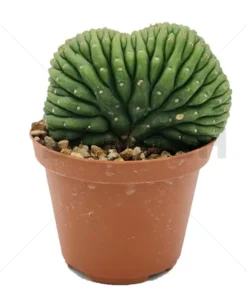
Trichocereus pachanoi – cristata (San Pedro) In soil – Small
Cactus for sale
Reviews
There are no reviews yet.