
Thanksgiving Cactus
17.00€
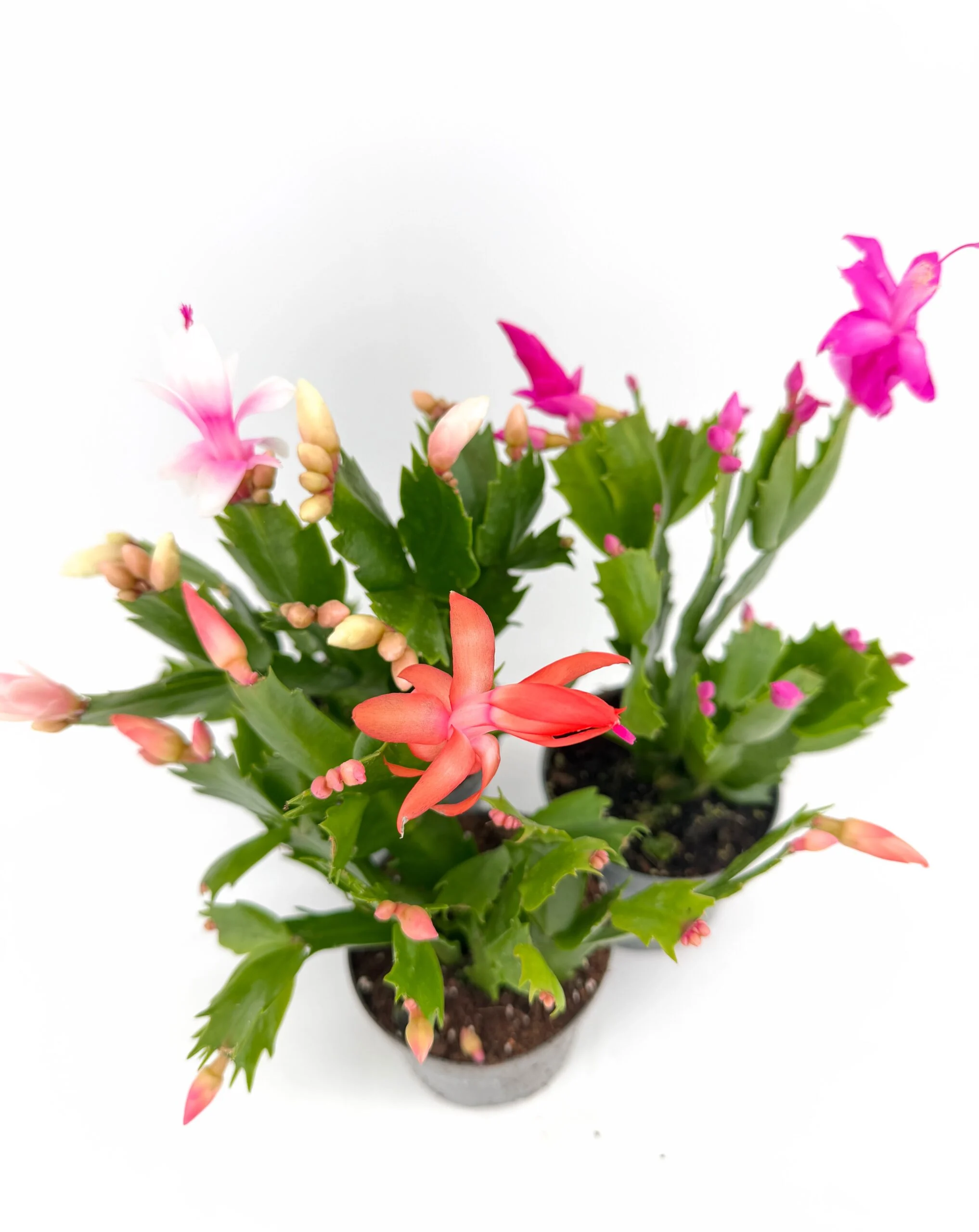
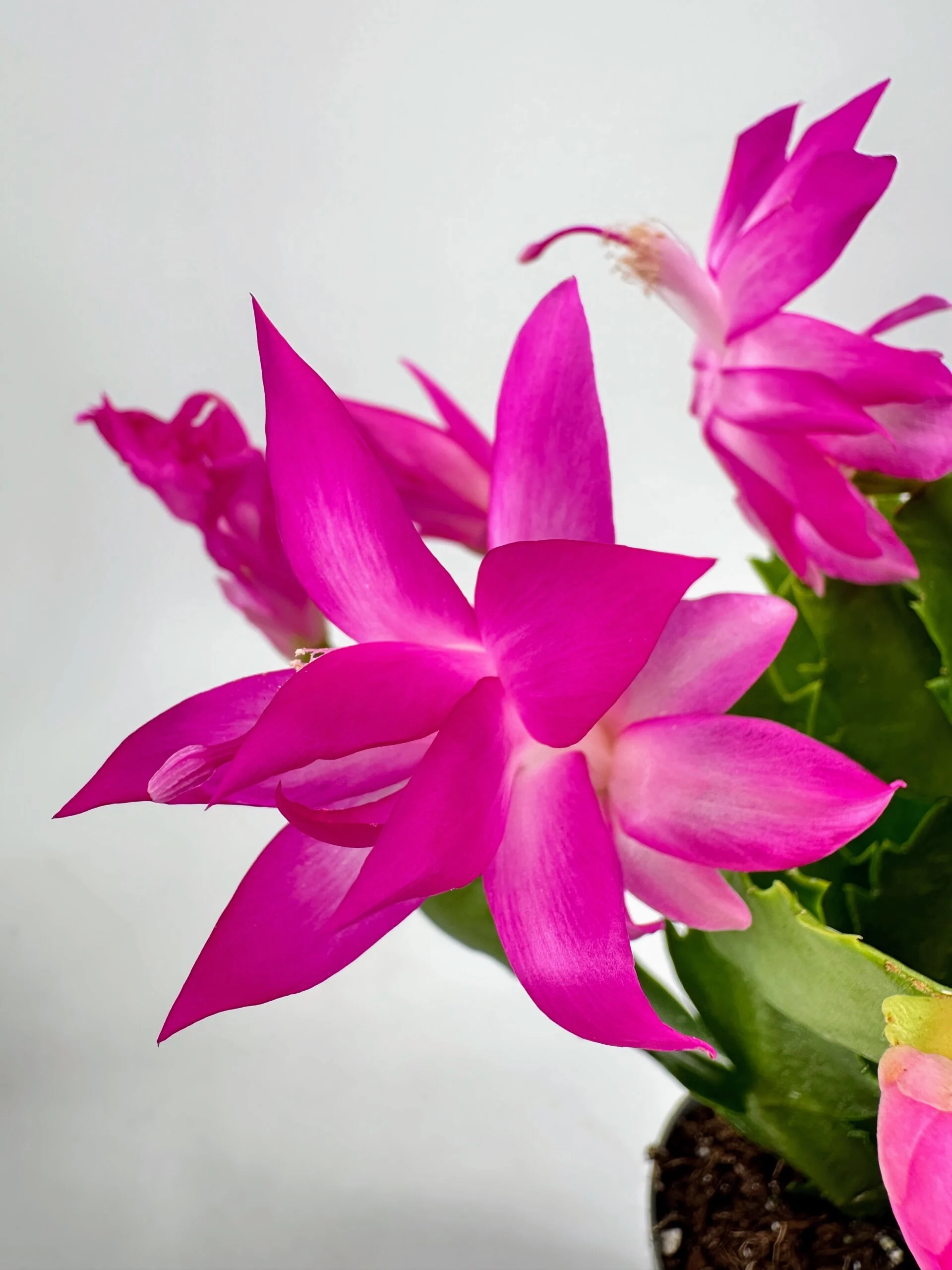
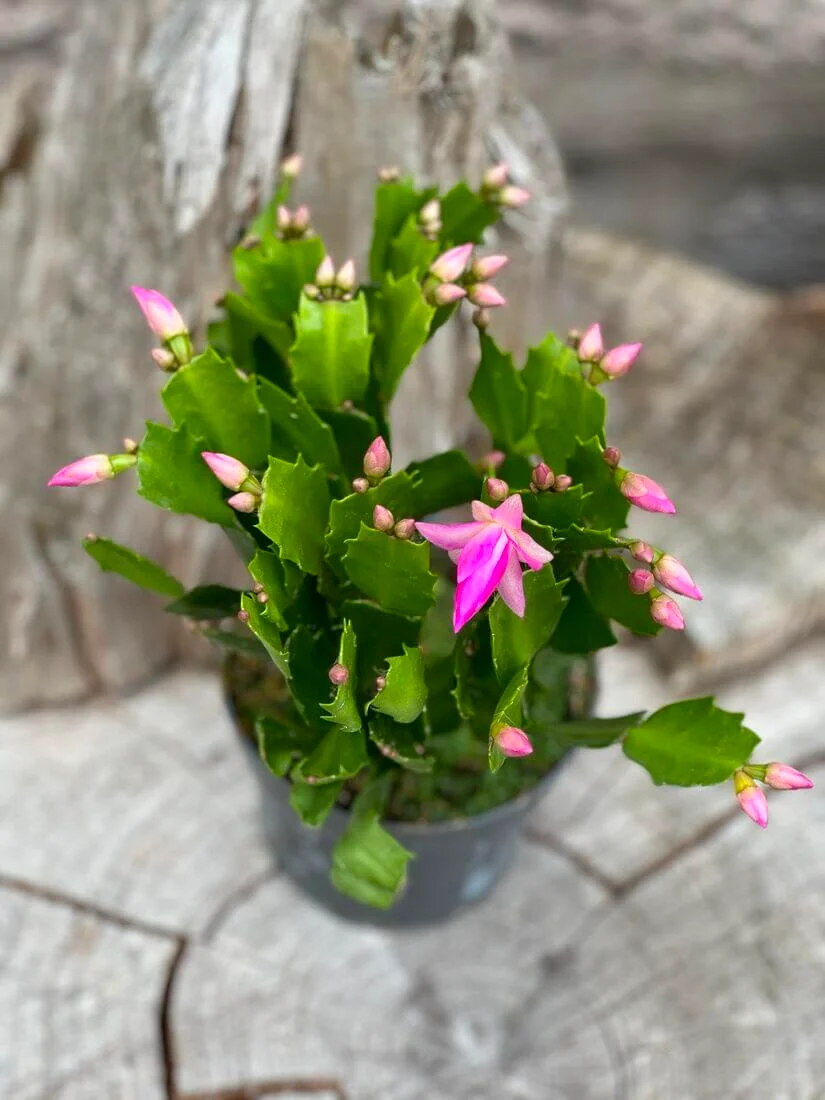
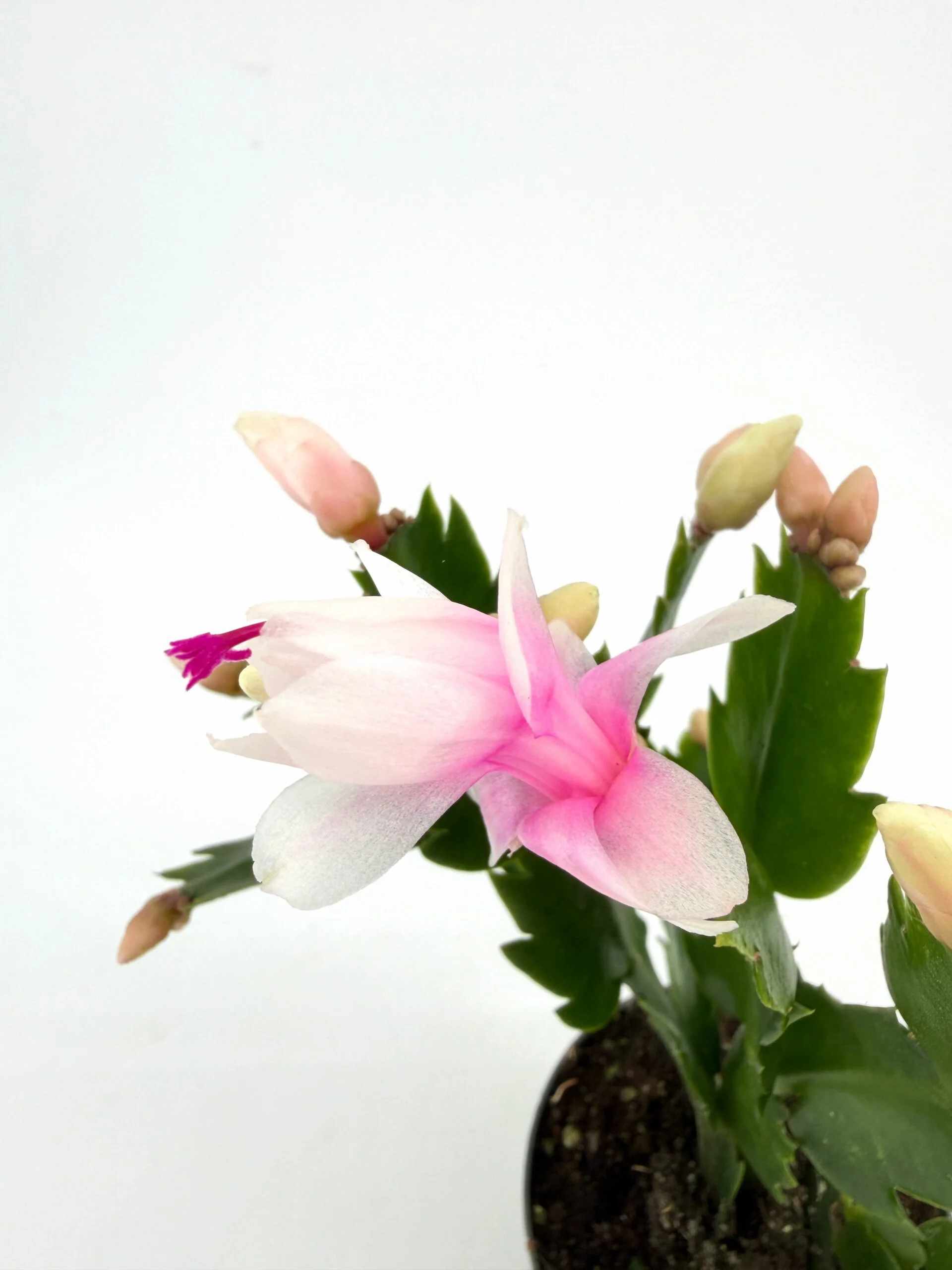
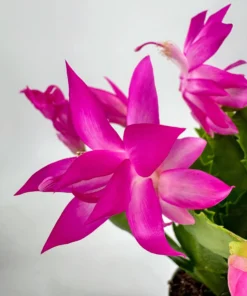
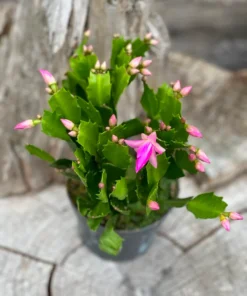
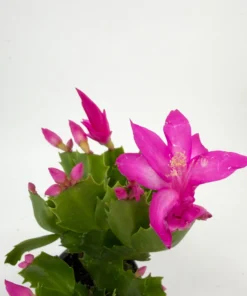
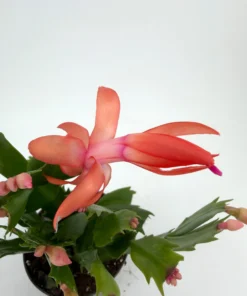
SCHLUMBERGERA zygo ‘Flame Pink’. 6-12″ tall, 12-24″ spread, bright: indirect light-partial shade, mid fall-winter bloom. Bright green, flattened and scalloped stem segments have a graceful arching habit. Star‑shaped, tubular flowers emerge from the notch tips, displaying rich flamingo‑to‑fuchsia pink petals, often with a white or pale base. It can be grown outdoors in mild climates, but must be protected from frost and cold drafts. Zones 9-11. Potted in 3″ pot.
Planting Instructions:
Light: Bright, indirect light
Water: Water when top inch is dry
Temperature: 60–75°F
Tips: Blooms in cool temps; avoid overwatering
Thanksgiving Cactus For Sale
The Thanksgiving cactus (Schlumbergera truncata) is a distinctive flowering houseplant recognized by its pointed, segmented green stems and vivid seasonal blooms. Native to the humid forests of southeastern Brazil, this tropical cactus develops very differently from the rigid, spiny forms associated with desert species.
Its branching stems gradually create an attractive cascading habit, while mature plants can produce striking flowers in pink, red, orange, purple, white, and related shades. With proper care, Thanksgiving cactus can remain part of an indoor collection long after its seasonal flowers have faded.
Explore our available Thanksgiving cactus for sale and choose a living Schlumbergera truncata for your collection.
Schlumbergera truncata — The Thanksgiving Cactus
The botanical name for Thanksgiving cactus is Schlumbergera truncata, a member of the cactus family, Cactaceae.
It is also known by common names such as crab cactus and claw cactus, references to the distinctive shape of its green stem segments.
What appear to be leaves are actually flattened photosynthetic stems known as cladodes. Along their margins are pronounced pointed or tooth-like projections that create the characteristic clawed appearance of the species.
As new segments develop, the plant becomes increasingly branched. Mature stems can arch outward and eventually cascade over the sides of a container.
Flowers emerge from areoles near the ends of mature segments, creating one of the plant’s most recognizable seasonal displays.
How to Identify a Thanksgiving Cactus
Holiday cacti are frequently confused in commercial settings, making stem structure particularly useful when identifying Schlumbergera truncata.
Look for:
- flattened, jointed green stem segments;
- distinctly pointed or tooth-like segment margins;
- branching growth that becomes more arching with maturity;
- an overall spineless appearance;
- tubular, asymmetrical flowers produced from stem tips.
The pointed segment margins are particularly important.
Flowering season can provide another clue, since Thanksgiving cactus commonly blooms earlier than Christmas cactus, but bloom timing can shift according to environmental and production conditions.
Stem structure therefore provides a more useful identification characteristic than flowering date alone.
Thanksgiving Cactus vs. Christmas Cactus
Although closely related, Thanksgiving and Christmas cacti have recognizable differences.
Schlumbergera truncata typically develops pronounced pointed projections along its stem-segment margins.
Christmas cactus, generally associated with Schlumbergera × buckleyi, typically has smoother, more rounded or scalloped segment margins.
Their flowering periods also tend to differ, with Thanksgiving cactus generally blooming earlier in the holiday season.
For buyers, however, the most useful distinction is visible even when neither plant is flowering:
Thanksgiving cactus = pointed, claw-like segment margins.
Christmas cactus = smoother, rounded or scalloped segment margins.
This distinction is particularly valuable when purchasing a plant outside its normal flowering period.
Why Grow a Thanksgiving Cactus?
Thanksgiving cactus offers a combination rarely associated with the cactus family.
Its green segmented stems provide year-round structure without the heavy spination of many desert cacti. As the plant matures, increased branching produces a softer, increasingly cascading form.
Then the appearance changes dramatically during flowering.
Buds develop from the terminal portions of mature segments before opening into prominent layered blooms that extend outward from the plant.
This combination of architectural segmented growth, compact indoor cultivation, seasonal flowering, and long-term development makes Schlumbergera truncata particularly appealing to houseplant growers and cactus collectors.
It is not simply a flowering plant for Thanksgiving. It can be maintained and developed as a permanent part of an indoor collection.
Choosing the Right Thanksgiving Cactus
When selecting a plant, look beyond the seasonal flower display.
Confirm the Botanical Identity
If you specifically want Thanksgiving cactus, look for Schlumbergera truncata rather than relying solely on broad labels such as “holiday cactus.”
The pointed stem margins provide an additional visual clue.
Choose Your Flower Color
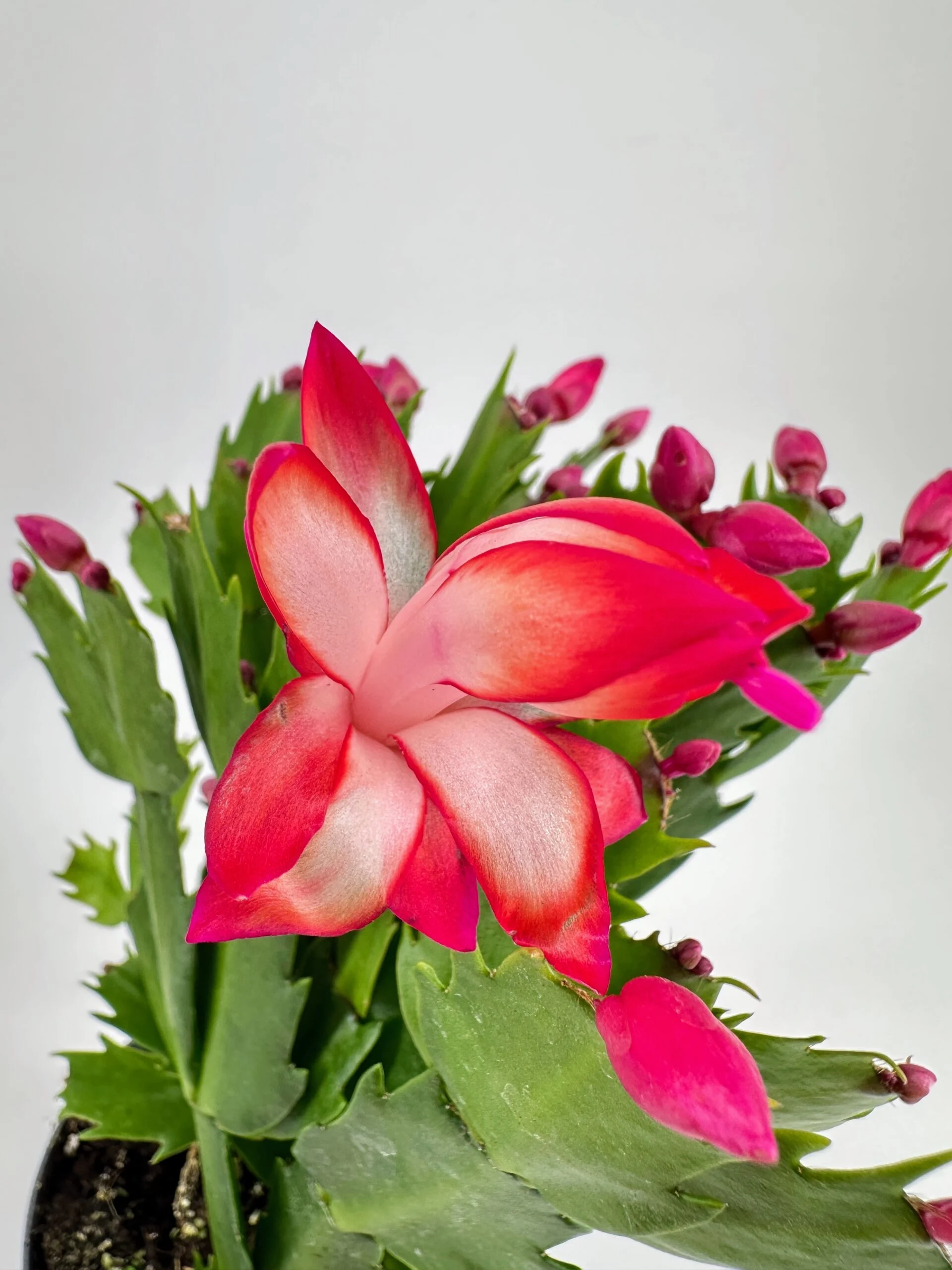
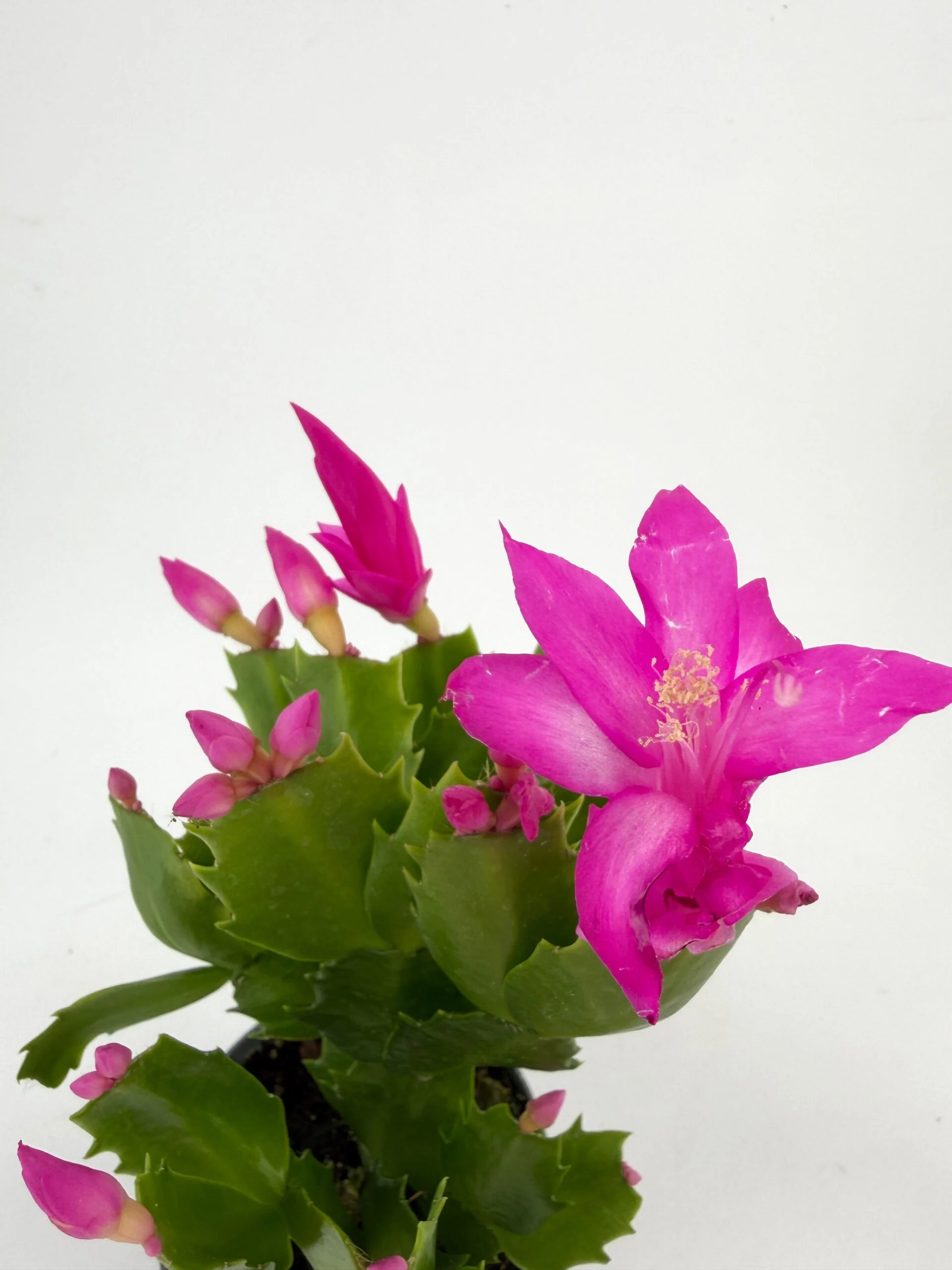
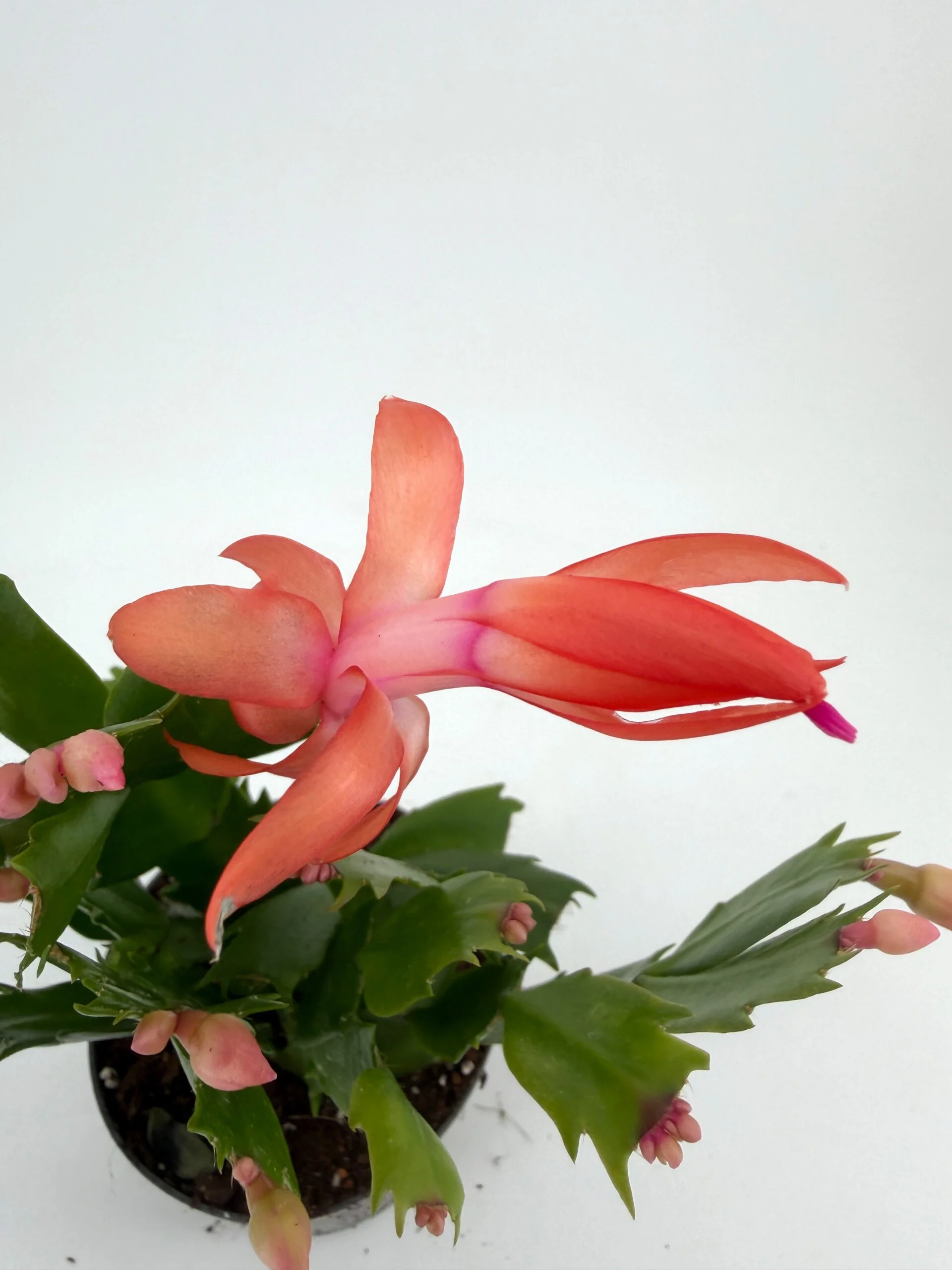
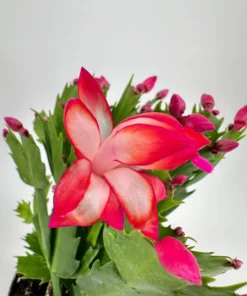
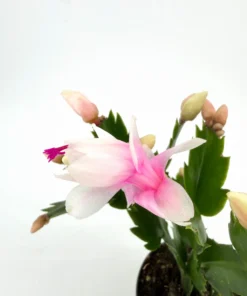
Cultivated Thanksgiving cacti occur in a broad range of colors, including pink, red, orange, purple, white, cream, and intermediate shades.
When a particular color matters, choose an identified cultivar or product variation rather than assuming flower color from the common name.
Consider Plant Size & Growth Stage
A young Thanksgiving cactus may be compact and relatively upright.
As branching increases, older plants can become broader and more cascading.
The size you choose should therefore reflect whether you want a younger plant to develop over time or a more established specimen with greater immediate presence.
Check the Actual Product Details
Before purchasing, confirm the listed plant size, container size, cultivar or flower color, and whether photographs show the exact specimen or a representative plant.
Bloom status should also be treated separately from plant identity.
A healthy Thanksgiving cactus does not need to be flowering at the time of purchase, and seasonal bloom cannot be guaranteed unless specifically stated for the individual product.
Flowers & Seasonal Color
The flowers of Schlumbergera truncata are among its strongest ornamental features.
Blooms develop from the terminal portions of mature stem segments and typically have an elongated, asymmetrical form with layered petals.
Flower color varies by cultivar and can include:
- pink;
- red;
- orange;
- purple;
- white;
- cream;
- multicolored or intermediate shades.
A plant’s flowering stage changes naturally throughout the season.
Depending on timing and growing conditions, a specimen may be vegetative, developing buds, actively flowering, or finishing its bloom cycle.
For that reason, flower color can be a stable cultivar characteristic while current bloom status is temporary.
A Tropical Forest Cactus — Not a Desert Cactus
Understanding where Thanksgiving cactus comes from explains much of its care.
Schlumbergera truncata originates from the humid forests of southeastern Brazil, where members of the genus grow as epiphytes associated with trees and rocky environments.
That ecology is very different from the exposed desert habitats associated with Saguaros and many prickly pears.
Thanksgiving cactus consequently performs best when treated as a tropical forest cactus.
It generally favors filtered light, more consistent moisture, and an airy growing medium that drains efficiently without behaving like extremely dry desert soil.
This distinction prevents one of the most common mistakes made with holiday cacti: applying desert-cactus care simply because the plant belongs to the cactus family.
Thanksgiving Cactus Care
Light
Bright, indirect or filtered light generally suits Thanksgiving cactus well.
Avoid abruptly exposing a sheltered plant to prolonged intense sunlight. Excessive direct exposure under hot conditions can stress or discolor the green segments.
A bright indoor location with protection from harsh midday sun is often suitable.
Watering
Thanksgiving cactus generally requires more consistent moisture than strongly drought-adapted desert cacti.
Allow the growing medium to approach dryness between waterings while avoiding both persistent saturation and unnecessarily prolonged severe dryness.
Do not rely on a fixed watering calendar.
Light, temperature, humidity, container size, plant size, and growing medium all influence how quickly moisture is used.
Growing Medium & Drainage
Good drainage remains essential.
Use an airy, well-draining growing medium capable of retaining some moisture without remaining waterlogged around the roots.
Containers should have functional drainage openings.
The objective is a root environment that receives moisture but also maintains adequate aeration.
Encouraging Thanksgiving Cactus to Bloom Again
Thanksgiving cactus can flower repeatedly across future seasons when healthy growth is followed by appropriate environmental cues.
Flower initiation is influenced by long, uninterrupted nights and cooler seasonal conditions.
This makes autumn light exposure important. Artificial lighting during the natural dark period can interfere with the long nights that help stimulate bud development.
Once buds begin forming, environmental stability becomes increasingly useful.
Large changes in moisture, temperature, or placement can contribute to bud drop.
Rather than treating the plant as disposable after flowering, continue maintaining healthy growth throughout the year and allow seasonal changes to prepare it for another bloom cycle.
Natural Variation Between Plants
Every Thanksgiving cactus is a living specimen, so some variation should be expected.
Plants can naturally differ in:
- number and length of stem segments;
- branching and overall width;
- green coloration;
- number of buds or flowers;
- symmetry;
- minor cosmetic markings;
- current growth stage.
Bloom status can change particularly quickly.
Exact plant dimensions, pot size, cultivar, flower color, propagation status, and whether photographs represent the individual specimen should therefore be confirmed through the specific product selection rather than inferred from general species information.
A Holiday Cactus Worth Keeping Year-Round
The name Thanksgiving cactus describes its typical flowering period, but it does not define the plant’s entire value.
Throughout the year, Schlumbergera truncata maintains its distinctive segmented structure. With maturity, additional branching transforms a smaller plant into a fuller specimen with increasingly arching stems.
Then seasonal flowering adds an entirely different dimension.
For growers seeking a cactus that combines recognizable botanical character, indoor adaptability, seasonal color, and long-term development, Thanksgiving cactus offers considerably more than a temporary holiday display.
And when botanical identity matters, its pointed, claw-like segments make Schlumbergera truncata a holiday cactus worth recognizing by more than its label.
Explore our available Thanksgiving cactus plants and choose the variety, flower color, and plant form that best fits your collection.
Frequently Asked Questions About Thanksgiving Cactus
What is the scientific name of Thanksgiving cactus?
The botanical name is Schlumbergera truncata, an epiphytic cactus native to southeastern Brazil.
How can I identify a Thanksgiving cactus?
Examine the flattened green stem segments. Thanksgiving cactus characteristically develops pronounced pointed or tooth-like projections along their margins, creating a claw-like appearance.
Is Thanksgiving cactus the same as Christmas cactus?
No. Thanksgiving cactus is Schlumbergera truncata, while Christmas cactus is generally associated with Schlumbergera × buckleyi. Their stem margins are one of the easiest distinctions: Thanksgiving cactus is more pointed, while Christmas cactus is generally smoother and more rounded.
Why is Thanksgiving cactus called a crab cactus?
The pointed projections along the edges of its flattened stem segments resemble claws, which has led to common names including crab cactus and claw cactus.
When does Thanksgiving cactus bloom?
It typically flowers during the late fall holiday period, often around November. Actual flowering time can vary according to growing conditions and how the plant has been managed.
Can Thanksgiving cactus grow indoors year-round?
Yes. Schlumbergera truncata is widely grown as an indoor container plant and can be maintained year-round with appropriate light, moisture, drainage, and temperatures.
Does Thanksgiving cactus need full sun?
It generally performs better with bright, filtered or indirect light than prolonged intense direct sunlight. Its natural ecology is very different from that of an exposed desert cactus.
Can Thanksgiving cactus bloom every year?
Yes. Healthy plants can flower in subsequent seasons. Long nights and cooler seasonal conditions help stimulate flower-bud development.
Be the first to review “Thanksgiving Cactus”
Related products
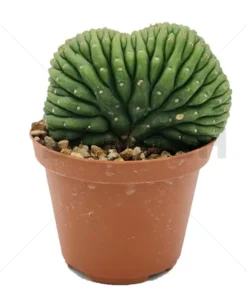
Cactus for sale
Trichocereus pachanoi – cristata (San Pedro) In soil – Small
Cactus for sale
Cactus for sale
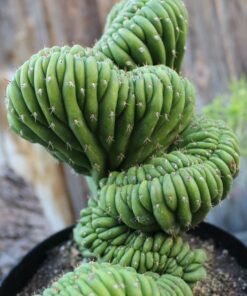
Cactus for sale
Cactus for sale
Cactus for sale
Cactus for sale
Reviews
There are no reviews yet.