Syrian Rue Seeds for Sale
Explore Syrian Rue Seeds for Sale from Peganum harmala, the distinctive botanical species also known as Harmal, Esfand, Espand, and Wild Rue. Choose whole seeds with clear botanical identification and straightforward product information, making it easier to compare available quantities and seed lots with confidence.
Known across the Middle East, Central Asia, the Mediterranean, and surrounding regions, Peganum harmala is valued for its unusual seed characteristics, long cultural history, and remarkable adaptation to dry environments.
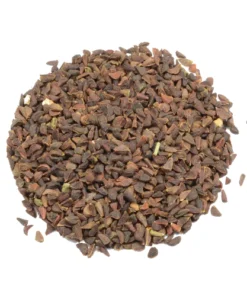
Syrian Rue Seeds For Sale
Price range: 34.00€ through 144.00€
What to Look for in Quality Syrian Rue Seeds
Quality starts with knowing exactly what you are buying. For Syrian rue, useful product information matters considerably more than vague descriptions such as “premium,” “rare,” or “highest grade.”Correct Botanical Identity
Seeds should be clearly identified as Peganum harmala. This distinguishes Syrian rue from unrelated plants that may share similar common names, particularly true rue (Ruta graveolens).Whole-Seed Condition
For buyers looking specifically for seeds, the product format should be immediately clear. Whole Syrian rue seeds are small and compact, typically brown to dark brown, with an angular form and characteristically textured surface. Minor differences in size, shade, and shape are normal in natural seed material.Cleanliness and Handling
A well-prepared seed lot should be appropriately handled and reasonably free from unnecessary plant fragments, excess dust, and unrelated material. Natural variation should not be confused with contamination or poor handling.Origin and Lot Information
When genuine origin, harvest, or lot information is available, it adds useful context to the product. Provenance should be documented rather than invented simply to make ordinary seeds appear more exotic.Quantity
The amount included should be clearly stated, whether the product is offered by weight, approximate seed count, or another defined quantity. This makes meaningful comparison between options much easier.Viability and Germination Status
Do not assume that every Syrian rue seed sold online is represented as horticultural sowing seed. If planting is your purpose, check whether the specific seed lot is actually offered as viable planting material and whether the seller provides any relevant germination or harvest information.Syrian Rue — Peganum harmala
Syrian rue is the common English name for Peganum harmala, a perennial flowering species belonging to the Nitrariaceae family. Despite the word “rue” in its name, it is botanically different from true rue (Ruta graveolens). The plant develops branching stems with finely divided foliage and pale flowers. These are followed by rounded capsules that mature to contain numerous small brown seeds. Its appearance reflects its adaptation to comparatively dry, exposed environments. Established plants develop from a persistent root system and can tolerate conditions that would challenge many less drought-adapted species. This hardiness is an important part of the plant's botanical character—but it also explains why responsible cultivation is important outside its native range.Syrian Rue, Harmal, Esfand and Espand
The same species appears under several names because of its extensive geographical and cultural history. You may encounter:- Syrian** Rue**
- Harmal
- Harmel
- Esfand
- Espand
- Aspand
- Wild Rue
Understanding Syrian Rue Seed Characteristics
Botanical seeds should not be expected to look like manufactured products. Within a genuine seed lot, natural variation can occur in:- Size
- Shape
- Shade of brown
- Surface texture
- Maturity
- Appearance between harvests
Buying Syrian Rue Seeds Online
A strong product listing should remove uncertainty before you order. Check the information that actually affects your purchase:- Species: Is it clearly identified as Peganum harmala?
- Seed condition: Are you receiving intact whole seeds?
- Quantity: How much is included?
- Origin: Is provenance provided when genuinely known?
- Lot information: Is harvest or batch information available where relevant?
- Planting status: Are the seeds specifically represented as viable for sowing?
- Photography: Does the image accurately represent the product?
- Storage: Are sensible storage recommendations supplied?
- Restrictions: If planting, is the species permitted in your destination?
A Drought-Adapted Botanical Species
Peganum harmala is associated with dry, open landscapes across a broad geographical range extending through parts of the Mediterranean, North Africa, the Middle East, Central Asia, and Asia. It is particularly adapted to arid and semi-arid environments and can occur in disturbed or saline ground. The mature plant remains relatively low compared with large columnar species, producing branching growth, finely divided foliage, pale flowers, and rounded seed capsules. Its ability to persist under difficult conditions has helped the species establish outside portions of its original range. For growers, that characteristic makes local cultivation rules and responsible containment important considerations.Storing Syrian Rue Seeds
Good storage helps protect seed condition over time. Keep whole Syrian rue seeds:- Dry
- Away from excessive humidity
- Protected from direct sunlight
- Away from excessive heat
- In an appropriately closed container