
Christmas Cactus for Sale
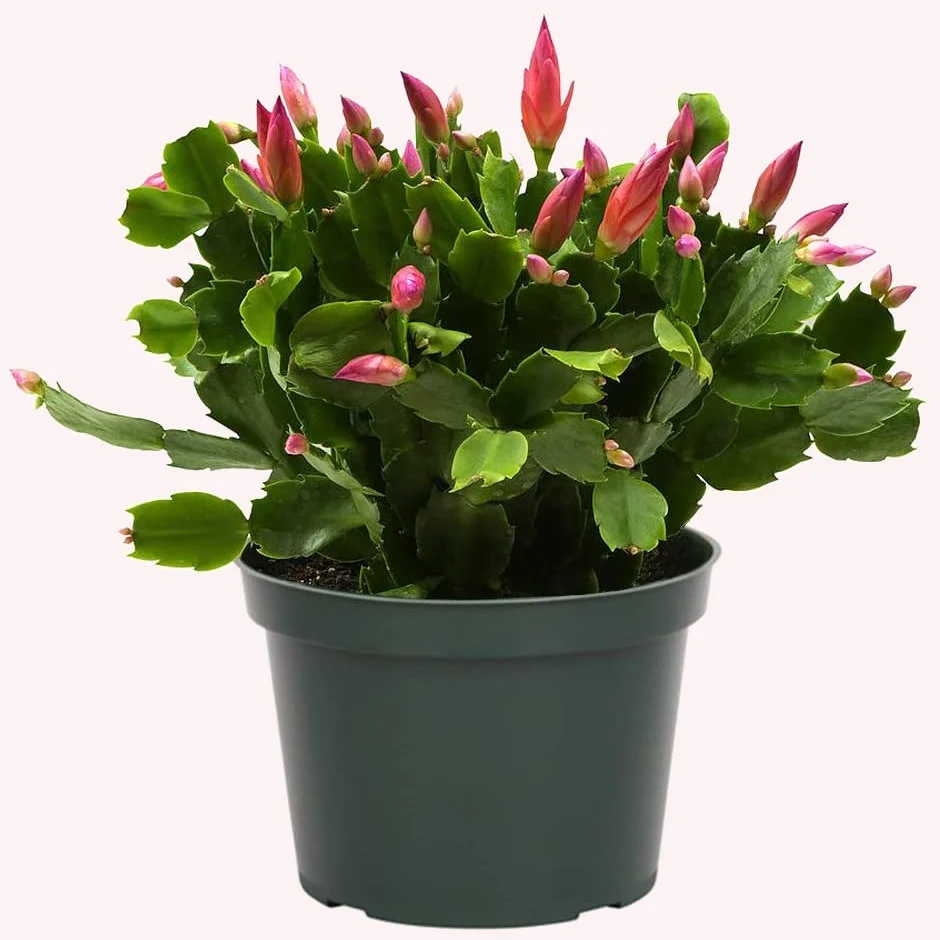
Bring home a Christmas cactus, a distinctive flowering houseplant known for its graceful segmented stems and colorful seasonal blooms. Unlike desert cacti, Christmas cactus belongs to the tropical Schlumbergera group, giving it a softer, cascading growth habit that becomes increasingly attractive as the plant matures.
Its combination of year-round green growth, winter flowering, compact indoor habit, and long-term growing potential makes it an excellent choice for houseplant growers and cactus collectors alike. With appropriate care, this is not simply a plant for one holiday season—it can continue growing and return with flowers year after year.
Explore our available Christmas cactus for sale and choose a living plant for your indoor collection.
A Distinctive Flowering Cactus for Indoor Growing
Christmas cactus offers a very different appearance from the upright, heavily spined species normally associated with the cactus family.
Instead of conventional leaves, it develops flattened green stem segments joined together in branching chains. New growth gradually extends outward, and established stems begin to arch over the container, creating the cascading form characteristic of mature plants.
Seasonal flowers emerge toward the ends of the stems, transforming the green plant into a striking flowering display.
This unusual growth reflects the plant’s natural background. Schlumbergera originates from humid forest environments in southeastern Brazil, where related species grow on trees and rocks rather than in open desert.
For the indoor grower, that means a Christmas cactus combines the character of a cactus with many of the qualities people value in a flowering houseplant.
What Makes Christmas Cactus Worth Growing?
Christmas cactus earns its place in a collection through more than its holiday flowers.
Its segmented stems remain ornamental throughout the year, while mature plants develop an increasingly full, arching profile. During the flowering season, buds form toward the stem tips and open into prominent blooms that contrast beautifully against the green growth.
Depending on the cultivar, Schlumbergera can produce flowers in shades of pink, red, white, orange, purple, and related tones.
It is also a plant that can be maintained beyond its initial flowering period. Rather than treating it as temporary seasonal décor, growers can continue cultivating it as a perennial houseplant and encourage future flowering cycles.
That combination of distinctive growth, seasonal color, manageable indoor cultivation, and long-term ornamental value is what makes Christmas cactus particularly appealing.
Christmas Cactus Botanical Identity
The name Christmas cactus deserves some clarification because it is used broadly in the plant trade.
Christmas cactus belongs to the genus Schlumbergera in the cactus family, Cactaceae. The plant traditionally recognized as the true Christmas cactus is Schlumbergera × buckleyi, a historic hybrid associated with Schlumbergera russelliana and Schlumbergera truncata.
However, several Schlumbergera species, cultivars, and hybrids are sold commercially under the Christmas cactus name.
One of the most common is Thanksgiving cactus (Schlumbergera truncata), which is frequently marketed simply as Christmas cactus.
For growers looking for a particular species, hybrid, flower color, or traditional Christmas form, the botanical identification and cultivar information attached to the individual product should therefore take priority over the common name alone.
Christmas Cactus vs. Thanksgiving Cactus
The easiest distinction is often visible before either plant flowers.
Traditional Christmas cactus (Schlumbergera × buckleyi) generally develops flattened stem segments with rounded or gently scalloped margins.
Thanksgiving cactus (Schlumbergera truncata) typically has more pronounced pointed projections along the edges of each segment.
Their usual flowering periods can differ as well. Thanksgiving cactus commonly begins blooming earlier in the holiday season, while the traditional Christmas cactus tends to flower later. Cultivar and growing conditions can influence exact bloom timing, so stem shape remains an especially useful identification characteristic.
This distinction matters when purchasing because the two names are often used interchangeably despite referring to different horticultural forms.
Flowers, Stems & Mature Growth
Christmas cactus changes noticeably as it develops.
Young plants begin with relatively compact segmented growth. Continued branching creates additional stems, which lengthen and gradually develop the plant’s characteristic arching or trailing form.
Flowers are produced primarily toward the ends of mature stems. Bloom color and flower characteristics depend on the cultivar, making accurately identified varieties especially interesting for growers building a collection.
The trailing habit also creates attractive display possibilities. As the plant becomes larger, positioning it on a raised surface, plant stand, shelf, or similar location allows the segmented stems to develop naturally around the container.
Even outside its flowering season, the unusual stem architecture gives the plant a recognizable ornamental appearance.
How to Care for Christmas Cactus
The key to successful Christmas cactus care is remembering that this is a tropical forest cactus, not a desert cactus.
Light
Bright, indirect or filtered light is generally ideal.
Good natural illumination supports healthy growth, but prolonged intense sunlight can stress or discolor the green stems, particularly when a plant has not been gradually acclimated to stronger light.
An indoor position that receives abundant light without harsh midday exposure is usually appropriate.
Watering
Christmas cactus generally appreciates more consistent moisture than many desert species, but it should never remain waterlogged.
Instead of watering according to a rigid calendar, check the growing medium and consider the plant’s environment. Temperature, light, season, container size, substrate, and active growth all influence how quickly moisture is used.
Allow excess water to drain freely and avoid leaving the root zone persistently saturated.
Soil & Drainage
Use an airy, well-draining growing medium that provides both moisture retention and root-zone aeration.
Because Schlumbergera developed in forest environments where its ancestors grew on trees and rocks among accumulated organic material, dense soil that remains wet for extended periods is poorly suited to its natural growth strategy.
A container with functional drainage is therefore important.
Encouraging Christmas Cactus to Bloom Again
One of the strongest reasons to grow Christmas cactus is its ability to provide more than a single seasonal display.
Flower-bud development responds to seasonal changes, particularly day length and temperature. During autumn, longer uninterrupted periods of darkness together with appropriate cooler conditions can help initiate budding.
Excess artificial light during the normal nighttime period may interfere with that seasonal response.
Once buds appear, keeping the plant’s environment reasonably consistent can help prevent unnecessary stress.
With appropriate year-round cultivation and suitable seasonal conditions, Christmas cactus can transition from an attractive green houseplant into a flowering centerpiece again in future seasons.
What to Expect From a Living Christmas Cactus
No two living plants develop identically.
Individual Christmas cactus specimens may naturally vary in stem length, branching, overall shape, green coloration, flower development, and minor surface characteristics. These differences are part of purchasing a living plant rather than a manufactured product.
Flowering status is also seasonal. Unless a particular product option specifically states otherwise, a Christmas cactus should not automatically be expected to arrive covered in flowers or buds.
After delivery, give the plant time to adjust to its new environment. Avoid moving a recently shipped specimen directly into intense sunlight or subjecting it to unnecessary environmental changes immediately after arrival.
The individual product selection should be used to confirm available plant size, cultivar, flower color, rooted status, and other inventory-specific characteristics.
More Than a Holiday Plant
Christmas cactus may be closely associated with winter celebrations, but its value extends well beyond the holiday season.
Throughout the year, its green segmented stems provide attractive foliage and continue branching as the plant develops. With age, its increasingly cascading form can become just as impressive as its flowers.
Then, under suitable seasonal conditions, buds provide another opportunity for winter color.
For growers accustomed to columnar or globular desert cacti, Schlumbergera also introduces an entirely different expression of the cactus family—tropical, epiphytic, largely spineless in appearance, and celebrated for flowering.
Whether you are expanding a cactus collection, looking for an enduring flowering houseplant, or searching specifically for a Christmas cactus for sale, this is a plant designed to be grown and appreciated long after the decorations come down.
Explore available Christmas cactus plants and choose the variety that fits your collection.
Frequently Asked Questions About Christmas Cactus
Is Christmas cactus a real cactus?
Yes. Christmas cactus belongs to the cactus family, Cactaceae. Its unusual appearance and care requirements reflect its tropical forest ancestry rather than the arid environments associated with many familiar desert cacti.
What is the botanical name of Christmas cactus?
The traditional true Christmas cactus is Schlumbergera × buckleyi. However, “Christmas cactus” is also used commercially for other Schlumbergera cultivars and hybrids, so the botanical identification of the individual plant is important.
Are Christmas cactus and Thanksgiving cactus the same?
No. Thanksgiving cactus is generally Schlumbergera truncata, while the traditional Christmas cactus is Schlumbergera × buckleyi. They are closely related but can be distinguished by characteristics including their stem-segment shape.
How can I identify a true Christmas cactus?
Examine the flattened stem segments. Traditional Christmas cactus generally has smoother, rounded or scalloped margins. Thanksgiving cactus usually has more prominent pointed projections along the segment edges.
Can Christmas cactus be grown indoors year-round?
Yes. Christmas cactus is well suited to indoor cultivation when provided with appropriate light, moisture, drainage, and seasonal growing conditions.
How much light does Christmas cactus need?
Bright, indirect light is generally suitable. Strong direct sunlight can stress the green stems, especially when the plant has not been acclimated to higher light levels.
Will my Christmas cactus arrive in bloom?
Not necessarily. Flowering depends on season, cultivar, plant maturity, and growing conditions. A plant should only be considered currently budding or flowering when this is specifically stated for the available product.
Can a Christmas cactus bloom again?
Yes. Healthy Christmas cactus plants can flower in subsequent seasons. Appropriate autumn light cycles, nighttime darkness, temperature conditions, and general plant health all influence bud development.
| Variety | Christmas Cactus, 6" Pot, Stylish Pot Cover Included, Holiday Cactus ‘Christmas Flame’ (Schlumbergera truncata hybrid) 4" Pot Size, Christmas Cactus mixed |
|---|
Be the first to review “Christmas Cactus”
Related products
Cactus for sale
Cactus for sale
Cactus for sale
YOPO – VILCA SEEDS / 200gr at 1kg – (Anadenanthera Peregrina) 100% Pure Natural and Organic
Bolivian Torch Cactus
Cactus for sale
San Pedro Pachanoi (Trichocereus) In Pot Large 25 CM – 40 CM
Cactus for sale
Cactus for sale
Cactus for sale
Reviews
There are no reviews yet.