Saguaro Cactus For Sale
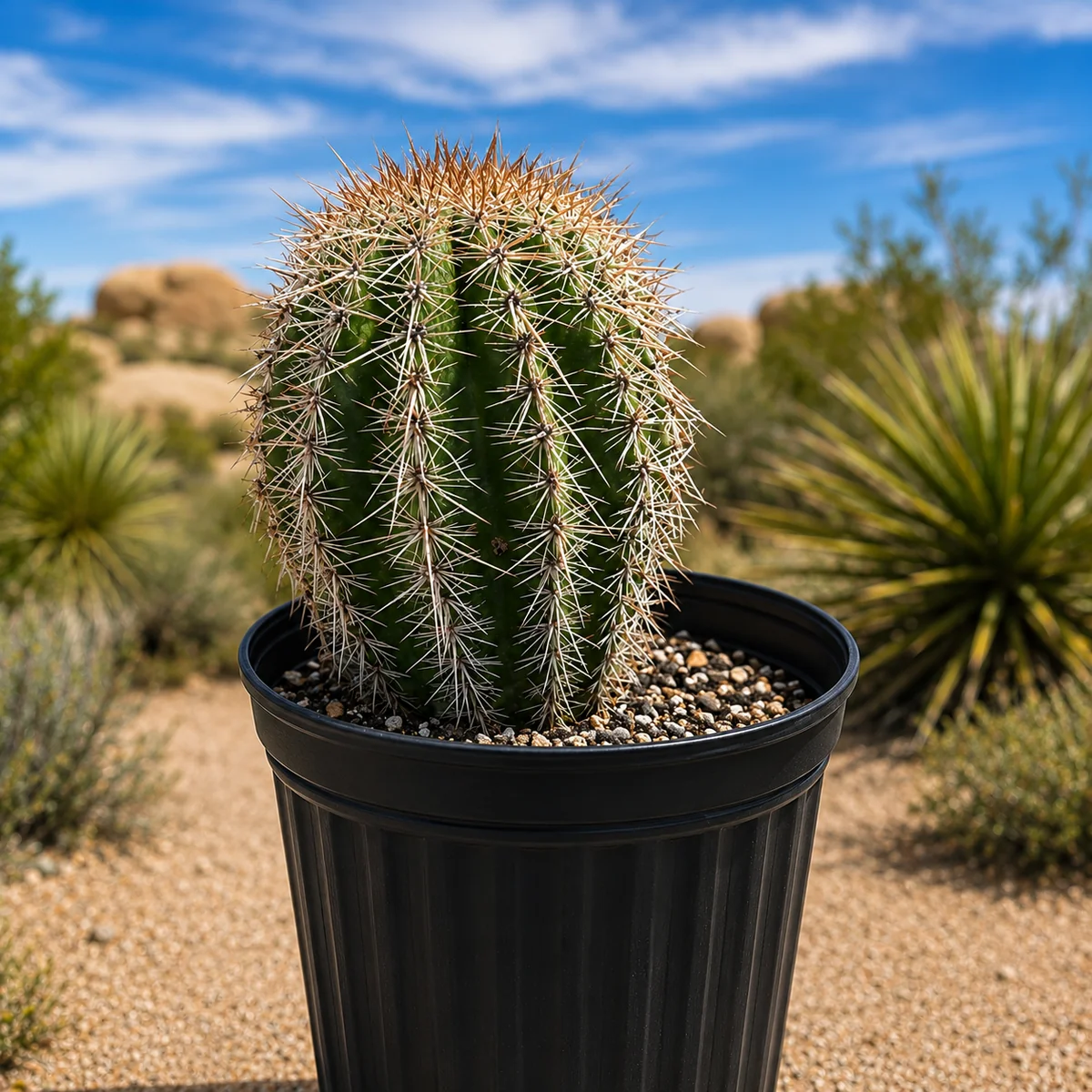
The Saguaro cactus (Carnegiea gigantea) is one of North America’s most iconic desert plants, recognized by its deeply ribbed columnar stem and the dramatic upward-reaching arms that may develop with age. Native to the Sonoran Desert, this exceptionally long-lived cactus offers collectors something very different from faster-growing columnar species: a plant whose distinctive character develops gradually over decades.
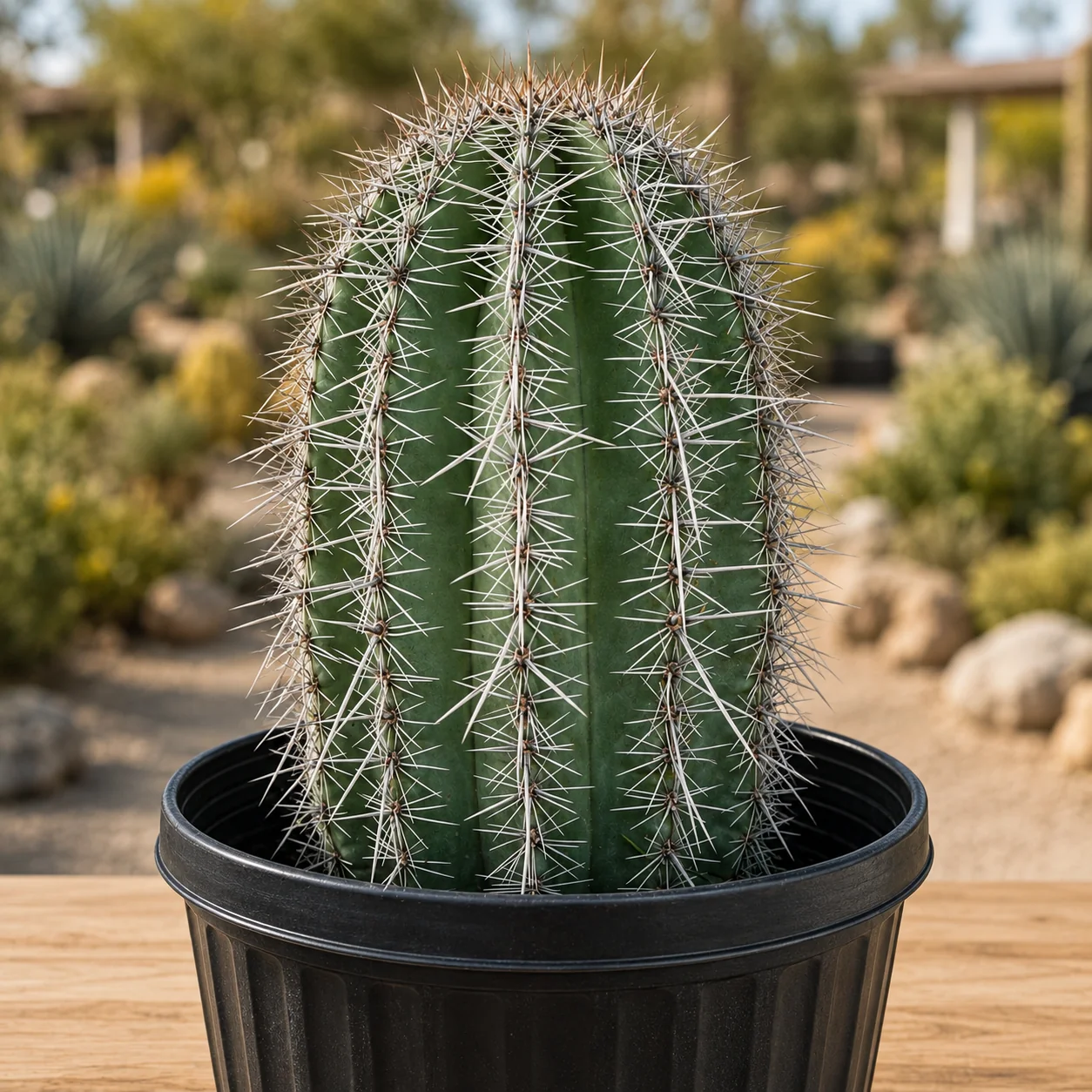
Young Saguaros begin as compact upright columns, making them fascinating plants to cultivate from an early stage. Their architectural form, remarkable longevity, and unmistakable desert heritage make Carnegiea gigantea an outstanding choice for collectors and growers interested in authentic North American cacti.
Explore our available Saguaro cactus for sale and choose a living specimen for long-term cultivation.
Why Grow a Saguaro Cactus?
Few cactus species carry the visual identity of the Saguaro.
Its tall, upright growth and prominent vertical ribs create the classic silhouette associated with the Sonoran Desert. Mature specimens can eventually become enormous, tree-like cacti, while younger plants display a much simpler but equally distinctive columnar form.
For collectors, much of the appeal comes from watching that architecture develop.
A young Saguaro should not be purchased with the expectation of rapid growth or quick branching. Carnegiea gigantea develops slowly, and the famous multi-armed form belongs to mature specimens that have grown for many decades.
That makes Saguaro particularly rewarding for growers who appreciate long-term cultivation rather than immediate size.
Carnegiea gigantea — The True Saguaro
The accepted botanical name for Saguaro is Carnegiea gigantea, a member of the cactus family, Cactaceae.
It is the only living species classified within the genus Carnegiea.
Its native distribution is centered in the Sonoran Desert, particularly Arizona and Sonora, Mexico, with its natural range also extending into a limited portion of southeastern California.
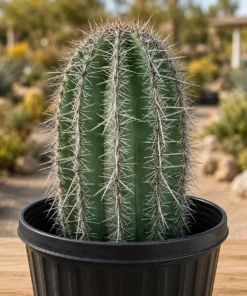
In habitat, Saguaros can develop into exceptionally large cacti. Mature plants have thick green stems divided by pronounced vertical ribs, with regularly positioned areoles producing clusters of spines.
The ribs can expand and contract as the plant’s internal water reserves change—one of several adaptations that help this species survive in an environment defined by intense heat and irregular rainfall.
How to Recognize a Young Saguaro
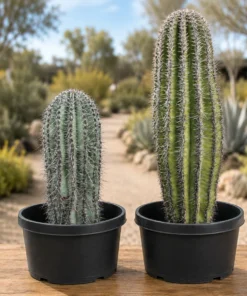
Young Saguaros look considerably different from the towering, branched specimens seen in photographs of the Sonoran Desert.
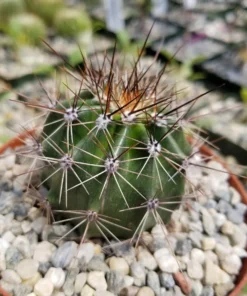
A juvenile plant normally develops as a single upright green column rather than immediately producing arms.
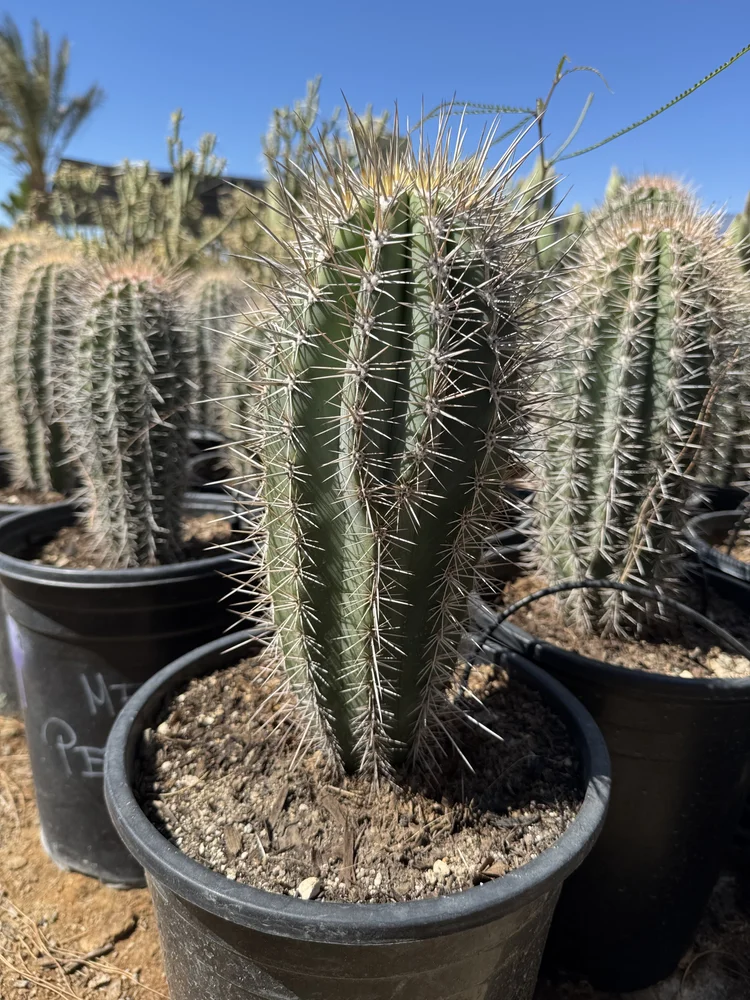
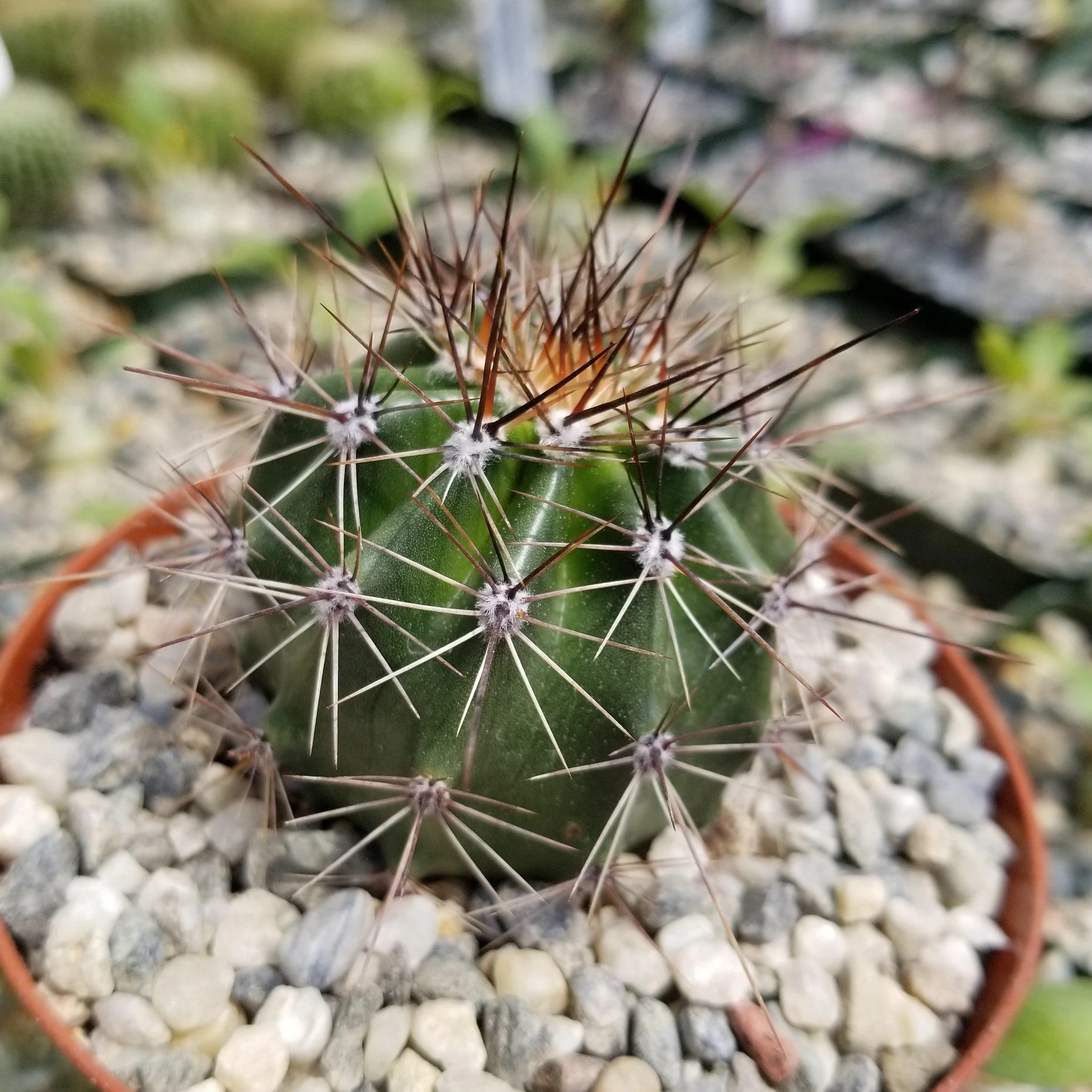
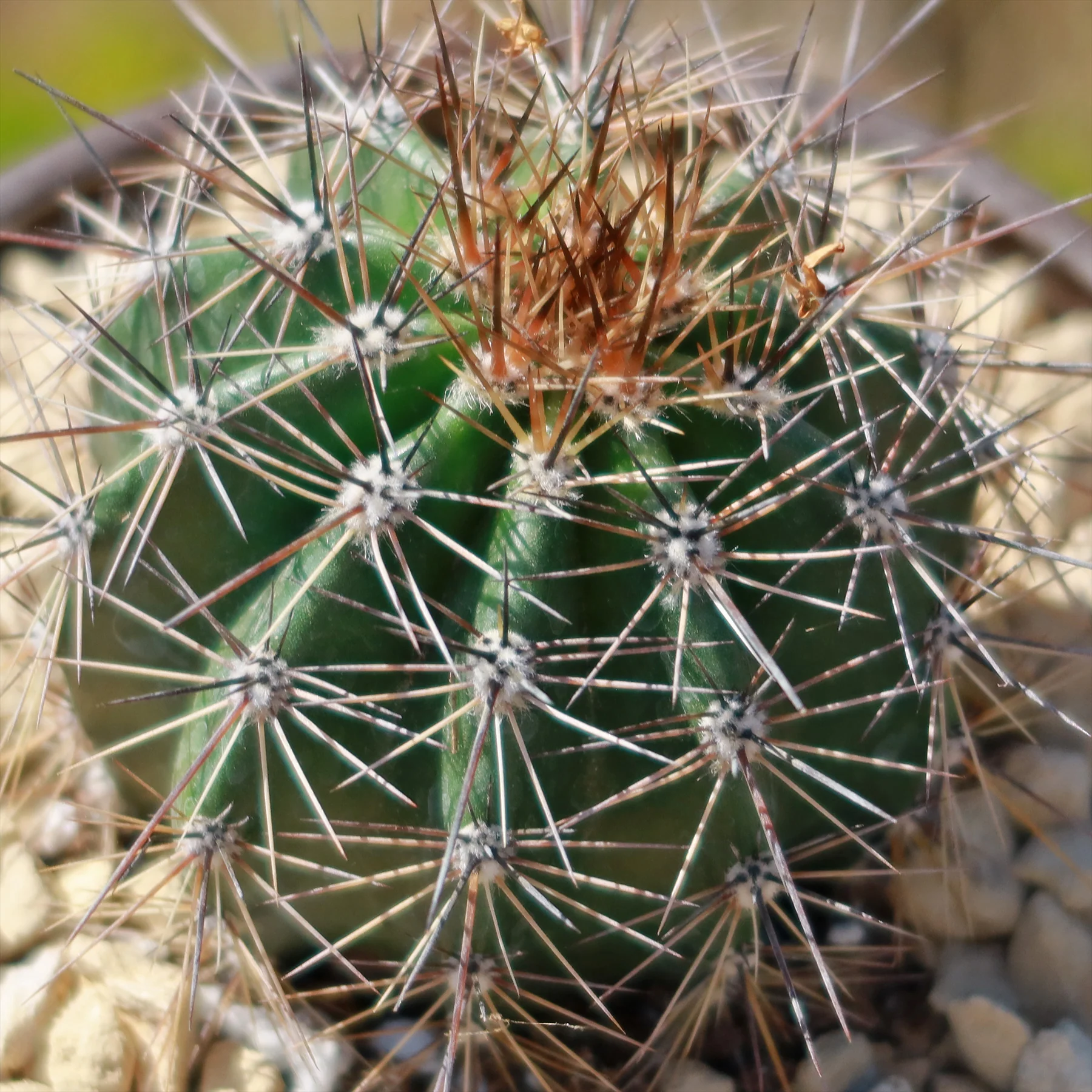
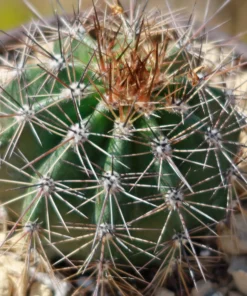
Look for the developing vertical ribs, regularly arranged areoles, and clusters of spines characteristic of the species. As the plant grows, its column becomes broader and the rib structure increasingly pronounced.
The absence of arms does not indicate that anything is wrong with a young plant.
In fact, branching is one of the poorest characteristics to expect when identifying juvenile Saguaros because arms generally belong to much older specimens.
This distinction is useful when buying a Saguaro cactus plant, particularly for customers accustomed to seeing only mature Saguaros in landscape photography.
How Fast Does a Saguaro Cactus Grow?
Saguaro is famously slow growing.
Growth varies according to plant age, temperature, rainfall or irrigation, soil conditions, elevation, and other environmental factors. Young plants can develop particularly slowly, so it is misleading to promise buyers a fixed number of inches of annual growth.
The characteristic arms also take considerable time to develop.
Under some conditions, branching may begin after approximately 50–70 years, while specimens growing under different environmental conditions can take substantially longer. Some Saguaros remain unbranched.
That slow development is an essential part of understanding what you are buying.
A young Saguaro is not a fast route to the enormous branched cactus seen in mature desert landscapes. It is an opportunity to cultivate the species from an earlier stage and watch its architecture develop gradually over time.
Mature Size, Flowers & Desert Character
Given sufficient time and suitable conditions, Carnegiea gigantea can become an enormous columnar cactus.
Mature Saguaros can reach substantial heights and may eventually develop multiple upward-curving branches. Individual specimens can survive for well over a century.
Older plants also produce prominent creamy-white flowers near the upper portions of the main stem and branches. These are followed by fleshy fruits containing numerous seeds.
Flowering is another characteristic of maturity and should not be expected from young plants.
For juvenile Saguaros, the primary ornamental qualities are the upright growth, pronounced rib structure, spination, and compact architectural form that gradually becomes more imposing as the cactus develops.
Growing Saguaro Cactus
Successful Saguaro cultivation begins with understanding its Sonoran Desert environment while recognizing that young container-grown plants do not necessarily have identical requirements to massive established plants in habitat.
Light
Saguaro is a high-light cactus, but age matters.
Mature specimens are strongly associated with exposed desert environments, while young Saguaros commonly establish with protection from surrounding vegetation.
A young or recently shipped plant should therefore not be moved abruptly from protected conditions into extreme direct sunlight.
Gradual acclimation allows the plant to adjust to stronger exposure while reducing unnecessary stress.
Soil & Drainage
Excellent drainage is essential.
Use a porous growing medium that allows excess moisture to move away from the roots efficiently. Containers should have functional drainage openings rather than allowing water to collect around the root system.
Heavy, persistently saturated soil creates conditions very different from those associated with the species’ natural habitat.
Watering
Avoid treating “desert cactus” as meaning “never water.”
Young container-grown Saguaros still require appropriate moisture during active growth. The important distinction is that the root zone should not remain continuously wet.
Rather than following a rigid schedule, consider temperature, season, plant size, container size, substrate, light, and how quickly the growing medium dries.
Allowing conditions to guide watering is considerably more useful than prescribing the same interval for every plant.
Can Saguaro Cactus Grow in a Container?
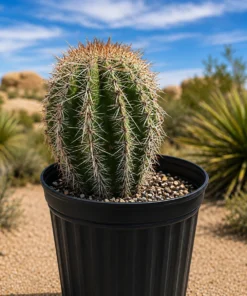
Yes. Young Saguaros can be cultivated in containers, making the species accessible to collectors who cannot immediately establish one in the landscape.
Container cultivation provides greater control over drainage and also allows smaller plants to be moved when protection from unsuitable environmental conditions is required.
Because Saguaro grows slowly, a young plant can remain manageable for a considerable period. Repotting should be based on actual root and plant development rather than performed unnecessarily.
Growers considering permanent landscape planting should take the opposite perspective: plan for the mature plant rather than only the small cactus being planted today.
A properly situated Saguaro has the biological potential to become a very large, exceptionally long-lived specimen.
Climate & Cold Considerations
Saguaro is adapted specifically to the Sonoran Desert rather than every environment that could broadly be described as hot or dry.
Cold temperatures and prolonged freezes help limit its natural distribution. Young specimens can be especially sensitive to environmental extremes.
Growers outside suitable warm climates should therefore consider local winter conditions carefully before planting a Saguaro permanently outdoors.
Container cultivation can provide greater flexibility in marginal climates because smaller specimens can be protected when necessary.
Avoid relying solely on a universal minimum-temperature number. Plant age, acclimation, duration of cold exposure, moisture, and local microclimate can all influence how a cactus responds.
Responsible Saguaro Sourcing
Because native Saguaros are protected within Arizona, provenance matters.
Arizona regulates the removal and movement of protected native plants, and permits, tags, or other requirements can apply when native Saguaros are moved from their original growing locations.
Commercially propagated plants are fundamentally different from unauthorized wild-collected specimens.
For buyers, the important principle is straightforward: choose Saguaros from legitimate commercial or propagated sources and never assume that a cactus growing naturally on undeveloped land can simply be removed.
Applicable regulations should always be checked before collecting, relocating, or transporting protected native specimens.
Natural Variation Between Saguaro Plants
Saguaros are living plants, so individual specimens are naturally variable.
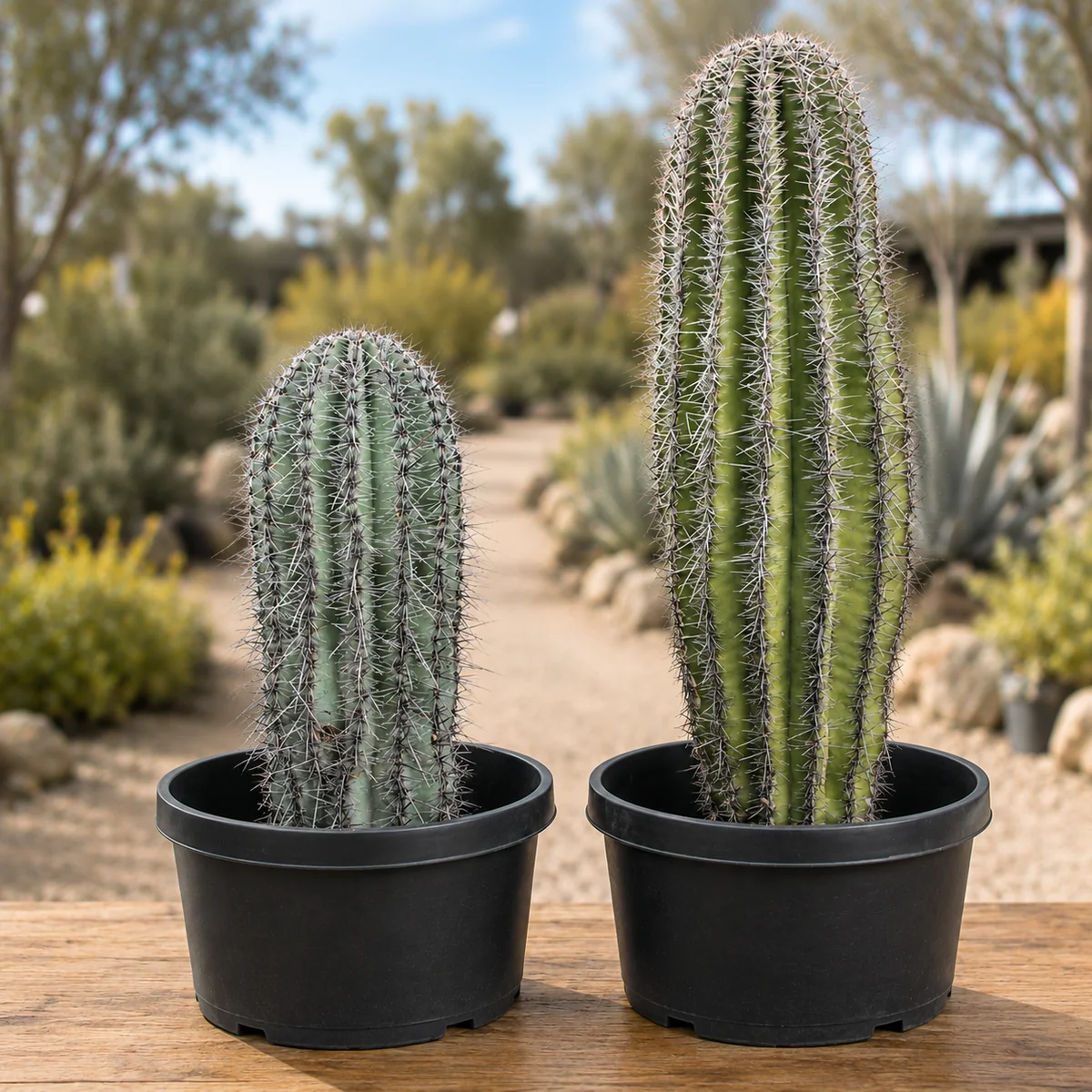
Differences may occur in stem thickness, height, rib development, spine length, spine coloration, green coloration, overall proportions, and minor surface markings.
Young plants should also not be expected to display the branched silhouette of an old desert Saguaro. A juvenile plant’s natural form is generally a simple upright column.
Exact plant dimensions, container size, propagation method, and whether product photographs show the individual plant or a representative specimen should be confirmed through the specific product selection.
An Iconic Cactus Worth Growing Slowly
Saguaro stands apart from faster-growing columnar cacti precisely because it cannot be rushed.
Its strong vertical form, pronounced ribs, Sonoran Desert origin, extraordinary longevity, and gradual development have made Carnegiea gigantea one of the defining plants of the American Southwest.
For collectors, growing a young Saguaro provides an opportunity to appreciate that species at a stage rarely emphasized in photographs of towering mature specimens.
It begins simply—a compact, spined column—and develops its character over years of cultivation.
For growers who value authentic desert species and plants with genuine long-term presence, the Saguaro is difficult to mistake for anything ordinary.
Explore our available Saguaro cactus plants and choose a specimen for your collection.
Frequently Asked Questions About Saguaro Cactus
What is the scientific name of Saguaro cactus?
The accepted scientific name is Carnegiea gigantea. It belongs to the cactus family, Cactaceae, and is the only living species within the genus Carnegiea.
Where are Saguaro cacti native?
Saguaro is native to the Sonoran Desert region, primarily Arizona and Sonora, Mexico, with its natural distribution extending into a limited area of southeastern California.
How quickly does a Saguaro cactus grow?
Saguaro is a slow-growing cactus, particularly when young. Actual growth varies with plant age and environmental conditions, so a fixed annual growth rate should not be assumed for an individual specimen.
How long does it take a Saguaro to grow arms?
Branching takes decades. Under some conditions, Saguaros may begin developing arms after approximately 50–70 years, while other specimens can take considerably longer or remain unbranched.
Can I grow Saguaro cactus in a pot?
Yes. Young Saguaros can be grown in containers with strong light, excellent drainage, an appropriate growing medium, and careful moisture management. Container cultivation also makes environmental protection easier when necessary.
Does Saguaro cactus need full sun?
Established Saguaros are adapted to strong sunlight, but young plants naturally benefit from some protection. A young or recently shipped Saguaro should be gradually acclimated when moving into significantly stronger direct sunlight.
Is it legal to buy a Saguaro cactus?
Legitimately sourced Saguaros can be commercially purchased. However, Arizona protects native Saguaros, and regulations can apply to the removal and transportation of plants taken from their original growing locations. Buyers should choose legitimate commercial or propagated sources.
Can I remove a Saguaro from the desert?
Do not remove a wild Saguaro without determining land ownership and applicable legal requirements. Native Saguaros are protected in Arizona, and permits or official documentation may be required for lawful removal and movement.
| Size | 4" Pot, 6" Pot, 1' Tall Plant, 2' Tall Plant, 3' Tall Plant, 4' Tall Plant, 5' Tall Plant, 6' Tall Plant |
|---|
Be the first to review “Saguaro Cactus”
Related products
Cactus for sale
Cactus for sale
Cactus for sale
SAN PEDRO DRIED SKIN / 30GR AT 2KG / – (TRICHOCEREUS PACHANOI CACTUS) HUACHUMA WACHUMA ECHINOPSIS
Cactus for sale
Cactus for sale
SAN PEDRO / 30GR AT 1KG / – (TRICHOCEREUS / ECHINOPSIS PACHANOI) HUACHUMA – CAPTUS POWDER
Cactus for sale
Cactus for sale
Cactus for sale
Reviews
There are no reviews yet.