
Organ Pipe Cactus for Sale
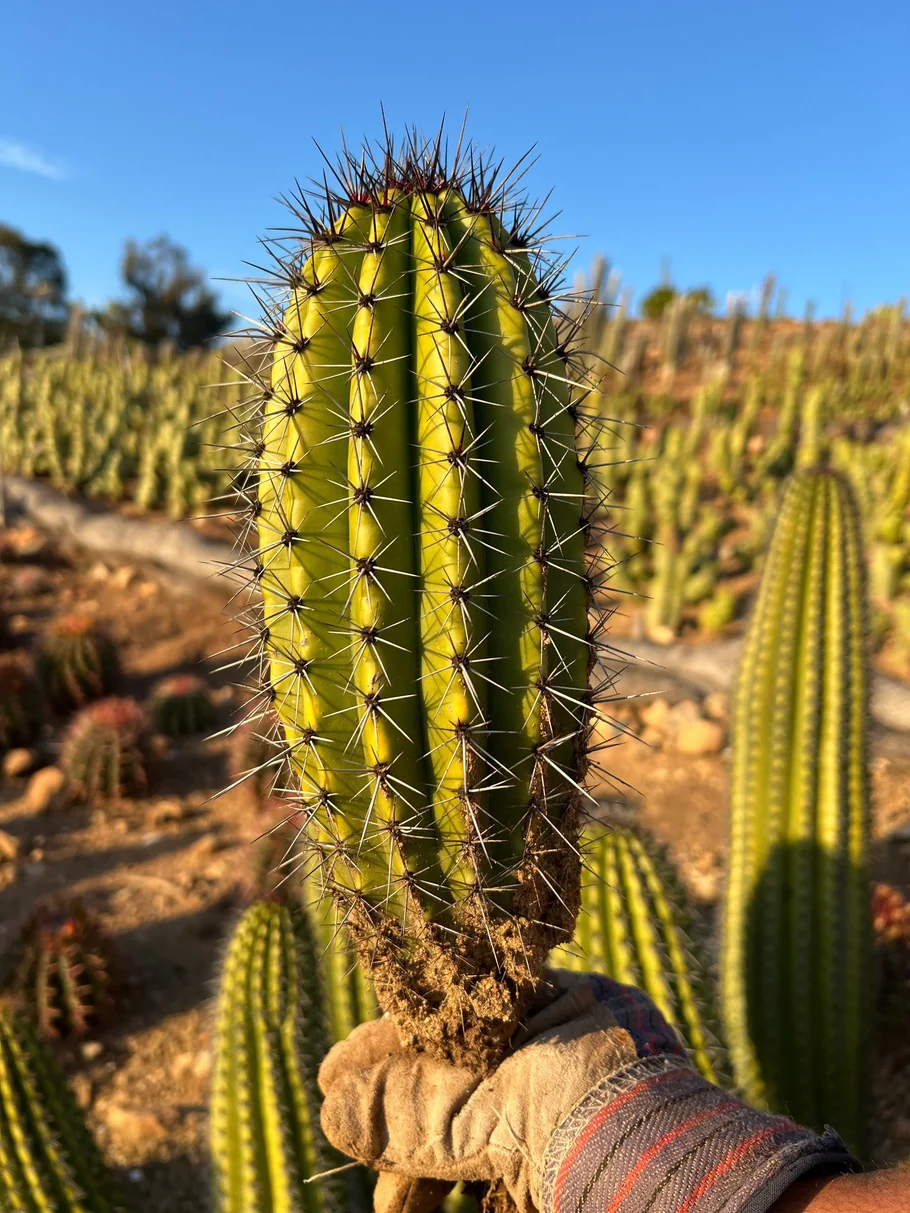
The Organ Pipe Cactus (Stenocereus thurberi) is a magnificent Sonoran Desert cactus known for developing numerous tall, slender columns from near its base. As those stems multiply and rise together, an established specimen takes on the unmistakable appearance of an old-fashioned pipe organ.
Native from southern Arizona into northern Mexico, this is a cactus with substantial long-term presence. Young specimens may begin simply, but mature plants can become broad clusters of ribbed, spiny columns, accompanied seasonally by pale nocturnal flowers and reddish fruit.
For growers with the climate and space to accommodate its development, Organ Pipe Cactus offers one of the most impressive naturally clustered forms among North American columnar cacti.
Stenocereus thurberi — The Organ Pipe Cactus
The accepted botanical name is:
Stenocereus thurberi
Kew recognizes the species in the family Cactaceae and records its native range from southern Arizona into northern Mexico, where it occurs primarily in desert and dry shrubland environments.
The older name Cereus thurberi may still appear in historical references, but Kew currently treats it as a synonym of Stenocereus thurberi.
Its common name comes directly from its mature architecture.
Rather than relying on one dominant trunk, an established plant produces multiple upright stems that collectively resemble the pipes of a large organ.
Why Does Organ Pipe Cactus Grow So Many Columns?
The clustered growth habit is fundamental to the species.
New columns generally emerge around the base, allowing an established plant to develop numerous parallel or slightly curving stems.
NPS describes mature Organ Pipe Cactus as having many columnar stems arising from the base, with occasional additional branching higher on the plant.
That growth pattern creates an increasingly broad specimen without sacrificing vertical character.
A young plant may not immediately resemble the enormous clusters seen in photographs from the Sonoran Desert.
The architectural effect develops with maturity.
For a collector, that makes Stenocereus thurberi particularly interesting as a long-term specimen: one growing point can eventually become part of an entire vertical cluster.
How to Recognize an Organ Pipe Cactus
Identification becomes easier once you understand its mature structure.
Look for:
- upright columnar stems;
- multiple stems developing from near the base;
- pronounced vertical ribs;
- clusters of spines along the ribs;
- tall, comparatively slender mature columns;
- pale flowers on sufficiently mature growth;
- reddish fruit following successful pollination.
NPS reports 12–19 prominent ribs on wild stems within Organ Pipe Cactus National Monument.
The combination of numerous basal columns and heavily ribbed stems provides a much stronger identification clue than height alone.
Organ Pipe Cactus vs. Saguaro Cactus
Both are iconic Sonoran Desert columnar cacti, and inexperienced buyers can confuse young specimens.
Their mature architecture is very different.
Organ Pipe Cactus (Stenocereus thurberi) typically develops numerous relatively slender stems from near the base.
Saguaro (Carnegiea gigantea) normally develops a dominant central trunk, with mature specimens sometimes producing arms farther up the stem.
This means an established Organ Pipe Cactus resembles a cluster of vertical pipes, while a branching saguaro maintains a much more obvious primary trunk.
They also differ in cold tolerance, distribution, rib structure, flowers, fruit, and overall growth pattern.
Botanical identification is therefore considerably more reliable than referring to either simply as a “giant desert cactus.”
Choosing an Organ Pipe Cactus
This species changes substantially with maturity, so purchasing decisions should account for future development.
Consider the Current Growth Stage
A young plant may have a relatively simple structure.
A more developed specimen may already show additional basal growth.
The absence of a mature cluster on a juvenile plant is completely normal.
Look at the Stem Structure
Healthy growth should display the strongly ribbed columnar form characteristic of the species.
Exact rib count, spine presentation, thickness, and coloration can vary naturally.
Think About Mature Space
Organ Pipe Cactus can become a very large plant under favorable conditions.
NPS describes it as the second-largest columnar cactus in the United States and reports potential heights of up to approximately 23 feet.
A permanent landscape position should therefore be selected according to mature potential rather than current nursery size.
Consider Your Climate
Cold tolerance is an important limitation.
This is a warmth-loving Sonoran Desert species whose northern natural distribution is strongly influenced by freezing temperatures.
Verify the Individual Plant
Exact height, stem count, container size, rooting status, propagation method, current flowering or fruiting condition, and whether photographs show the exact specimen are inventory-specific characteristics.
Confirm these details from the individual product listing.
How Large Does Organ Pipe Cactus Grow?
Organ Pipe Cactus is capable of becoming substantial.
NPS reports individual stems commonly reaching approximately 5–15 feet in the monument and notes maximum heights around 23 feet for the species.
Size alone, however, does not explain its mature impact.
The number of stems matters just as much.
As additional columns develop around the base, an old specimen can occupy considerably more horizontal space than its young form suggests.
That makes Organ Pipe Cactus fundamentally different from purchasing a small cactus that remains permanently compact.
It is a plant to grow with future architecture in mind.
Night-Blooming Flowers
Mature Organ Pipe Cactus produces flowers adapted to a very different schedule from many familiar garden plants.
NPS reports that the flowers open shortly after sunset and close the following morning. In its northern range, flowering typically occurs from approximately May through July.
The blooms range from pale white to pinkish tones and emerge from developed stems.
Their nighttime opening is ecologically important.
In the Sonoran Desert, nectar-feeding bats—including the lesser long-nosed bat—are important pollinators, alongside other visitors.
For cultivation, flowering should be regarded as a characteristic of sufficiently mature plants under suitable conditions rather than something guaranteed on a young specimen.
Organ Pipe Cactus Fruit
Successful pollination can be followed by rounded reddish fruit.
NPS describes the fruits as thin-skinned, reddish, and containing numerous seeds. Wildlife including bats and birds contributes to fruit consumption and seed dispersal in the natural ecosystem.
The fruit has also historically been used as food by people in the region.
Fruit production depends on maturity, flowering, pollination, and growing conditions.
A young plant should therefore be selected primarily for its structural qualities rather than with the expectation of immediate fruit production.
A Cactus Shaped by the Sonoran Desert
Organ Pipe Cactus is strongly associated with the Sonoran Desert.
Within the United States, its natural occurrence is concentrated in southwestern Arizona, while its distribution extends much farther into Mexico.
Temperature helps explain this limited U.S. range.
NPS identifies Organ Pipe Cactus as particularly sensitive to severe frost. At the northern edge of its distribution, plants frequently occupy warmer south-facing rocky slopes where winter conditions are more favorable.
That ecological background is useful for cultivation.
This is a cactus adapted to:
- abundant sunlight;
- warm conditions;
- seasonal desert rainfall;
- excellent drainage;
- environments without prolonged severe freezing.
Growers outside comparable climates should account for those requirements rather than assuming that all desert cacti share the same cold tolerance.
How to Grow Organ Pipe Cactus
Light
Provide abundant sunlight.
Organ Pipe Cactus naturally occupies highly exposed Sonoran Desert environments, and strong light supports sturdy columnar growth.
A nursery-grown plant that has previously received filtered or protected light should still be acclimated gradually before being placed in substantially stronger direct sun.
Soil & Drainage
Excellent drainage is fundamental.
Use a porous cactus substrate that allows excess water to move efficiently away from the roots.
Containers need functional drainage openings.
For landscape planting, avoid low areas or heavy soils where water remains around the root zone for extended periods.
Watering
Organ Pipe Cactus is drought adapted, but cultivation should respond to active growth and actual environmental conditions.
Provide appropriate moisture during warm active growth, then allow the growing medium to dry sufficiently before watering again.
Avoid persistent saturation.
Temperature, sunlight, rainfall, season, plant size, airflow, and soil composition all influence water demand.
A fixed weekly schedule is therefore less useful than observing the plant and growing medium.
Cold Requires Special Attention
Cold tolerance deserves more emphasis for Organ Pipe Cactus than for many of the species in a general cactus collection.
NPS notes that severe frost can kill entire plants, while sub-freezing temperatures can damage young tissue at stem tips.
This sensitivity helps determine the northern boundary of its natural range.
For growers in frost-prone regions, container cultivation while the plant remains manageable can provide greater control over winter protection.
Large landscape specimens require a genuinely suitable climate.
Do not select this species for permanent outdoor cultivation solely because another columnar cactus survives winter conditions in the same region.
Species-specific cold tolerance matters.
Growing Organ Pipe Cactus in Containers
Young Organ Pipe Cactus can be maintained successfully as container specimens when provided with strong light and excellent drainage.
Container growing offers several advantages:
- greater control over substrate;
- easier moisture management;
- seasonal relocation;
- cold protection;
- flexibility while choosing a permanent growing position.
As the plant gains height and additional stems, however, stability becomes increasingly important.
A mature Organ Pipe Cactus is ultimately better understood as a large landscape-scale species than as a permanently compact houseplant.
Container cultivation is most practical while the specimen remains at a manageable stage.
Give a Landscape Specimen Room to Develop
In an appropriate warm climate, Organ Pipe Cactus can become a remarkable landscape focal point.
The strongest presentation allows its columns to be seen individually while still reading collectively as a cluster.
Avoid positioning it too close to:
- buildings;
- narrow walkways;
- driveways;
- utility infrastructure;
- heavily trafficked areas;
- plants likely to crowd its future basal growth.
Its mature footprint can become much greater than the diameter of a young plant suggests.
Allowing sufficient space from the beginning means the cactus can develop its characteristic organ-pipe architecture without requiring unnecessary intervention later.
Natural Variation Between Organ Pipe Cacti
Living specimens naturally vary.
Differences may occur in:
- stem height;
- stem diameter;
- number of ribs;
- spine length and coloration;
- number of basal stems;
- branching direction;
- overall symmetry;
- minor surface markings.
Age creates even greater differences.
A juvenile plant with one or only a few stems will naturally look very different from an established desert specimen containing numerous columns.
Exact plant dimensions, stem count, container size, rooting status, propagation method, and current reproductive condition should therefore come from the specific product listing.
From a Young Column to a Desert Landmark
The defining quality of Organ Pipe Cactus is not simply that it grows tall.
It is how that height multiplies.
Additional columns can emerge around the base until a once-simple young cactus becomes an entire group of upright stems. Each retains its own ribbed structure, yet together they create the pipe-organ silhouette that gives the species its name.
Mature plants add nocturnal flowers and reddish fruit to that architecture.
For growers capable of providing the warmth, drainage, sunlight, and eventual space it requires, Stenocereus thurberi offers the opportunity to cultivate one of the Sonoran Desert’s most recognizable columnar forms.
Choose an Organ Pipe Cactus when the goal is not merely a tall cactus, but a specimen whose clustered architecture becomes the defining feature as it matures.
Frequently Asked Questions About Organ Pipe Cactus
What is the scientific name of Organ Pipe Cactus?
The accepted botanical name is Stenocereus thurberi. Kew treats the older Cereus thurberi as a synonym.
Where is Organ Pipe Cactus native?
Its native distribution extends from southern Arizona into northern Mexico. NPS records it from southwestern Arizona south through Sonora, Sinaloa, and Baja California.
Why is it called Organ Pipe Cactus?
Mature plants produce numerous tall stems from near the base. Their clustered vertical arrangement resembles the pipes of a traditional organ.
How tall does Organ Pipe Cactus grow?
NPS reports potential heights of up to approximately 23 feet, although many wild stems are in the 5–15-foot range. Growth depends on age, climate, moisture, and cultivation conditions.
Is Organ Pipe Cactus the same as Saguaro?
No. Organ Pipe Cactus is Stenocereus thurberi, while Saguaro is Carnegiea gigantea. Organ Pipe typically produces numerous columns from near the base, whereas Saguaro develops a dominant trunk and may form elevated arms with maturity.
Does Organ Pipe Cactus flower at night?
Yes. NPS reports that its flowers open shortly after sunset and generally close the following morning.
Does Organ Pipe Cactus produce fruit?
Yes. Mature plants can produce reddish fruit after successful flowering and pollination. Fruit development depends on maturity and growing conditions.
Can Organ Pipe Cactus grow in a container?
Young plants can be maintained in containers with strong light and excellent drainage. Because the species can eventually become very large and multi-stemmed, long-term space requirements should still be considered.
Is Organ Pipe Cactus cold hardy?
It is relatively sensitive to severe frost. NPS notes that freezing temperatures can damage young stem tissue and that severe frost can kill plants, helping explain the species’ limited natural distribution in the United States.
| Rooted | 1'-2', 2'-3', 3'-4', 4'-5' |
|---|
Be the first to review “Organ Pipe Cactus”
Related products
Cactus for sale
Cactus for sale
Cactus for sale
Cactus for sale
Cactus for sale
Cactus for sale
Cactus for sale
Reviews
There are no reviews yet.