
Pencil Cactus For Sale
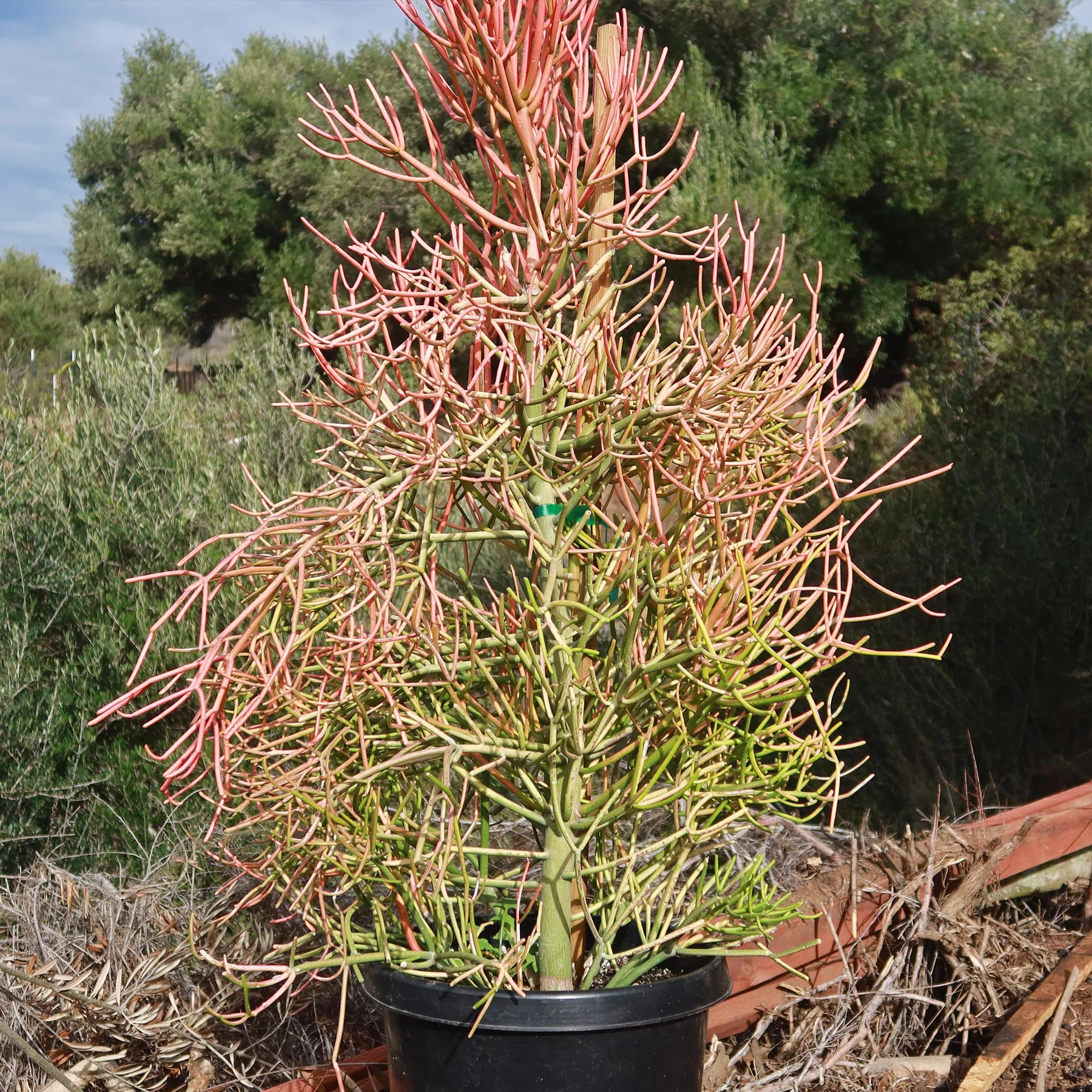
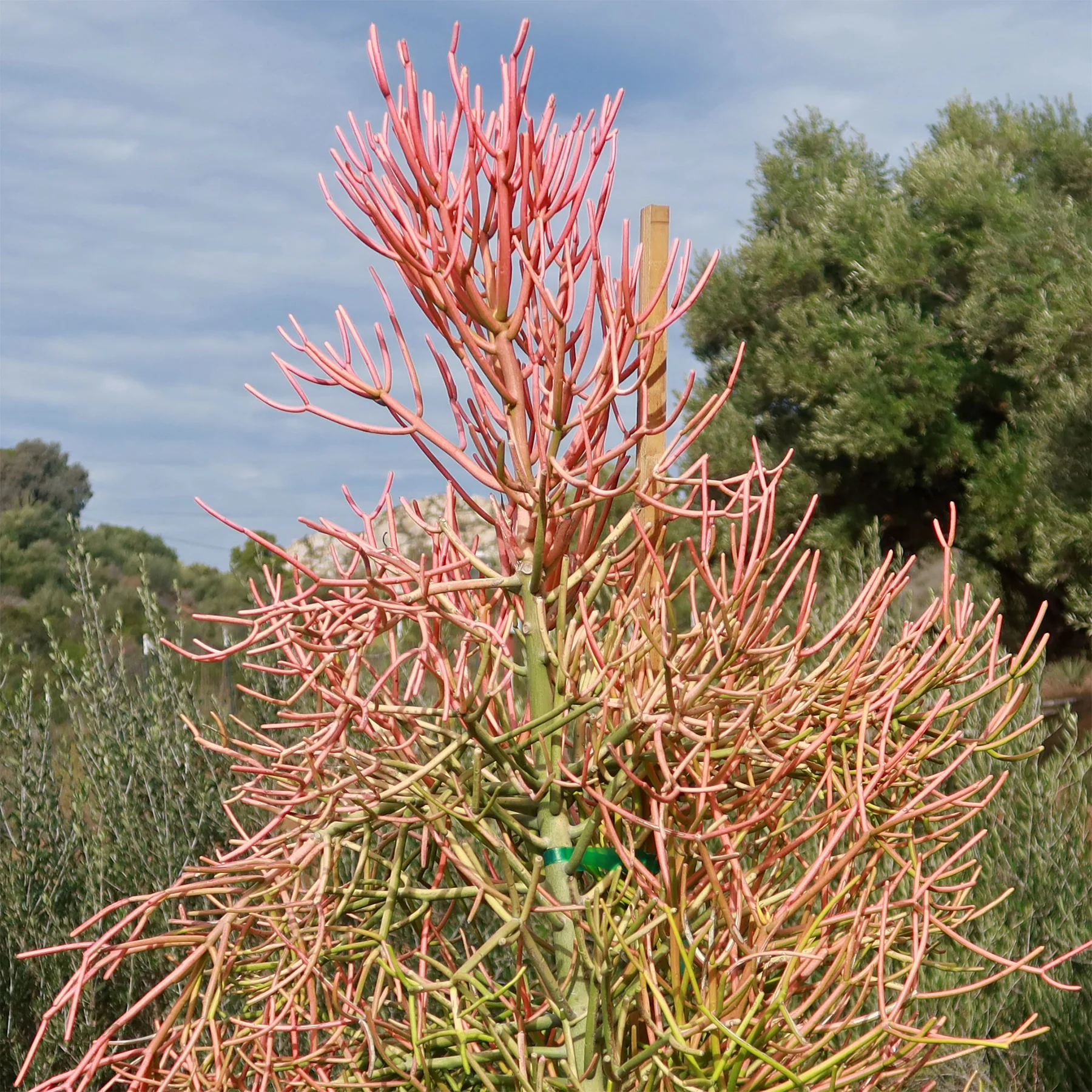
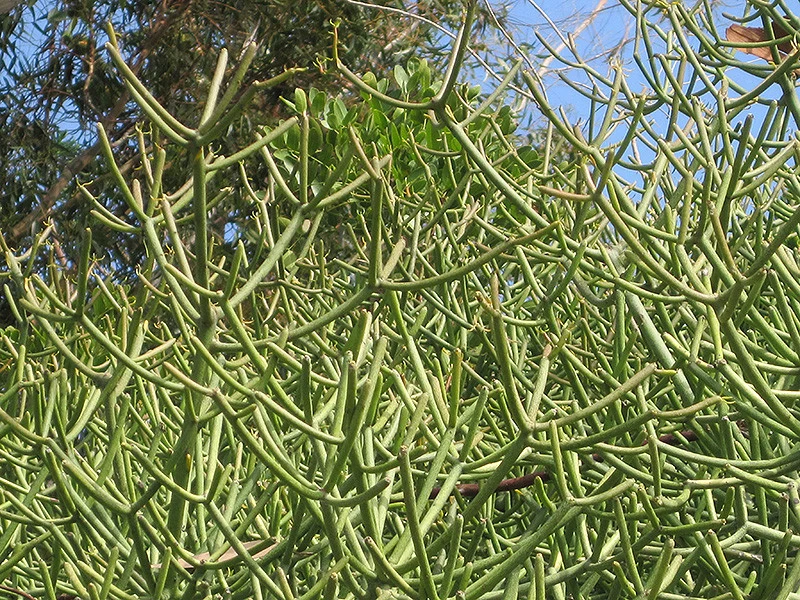
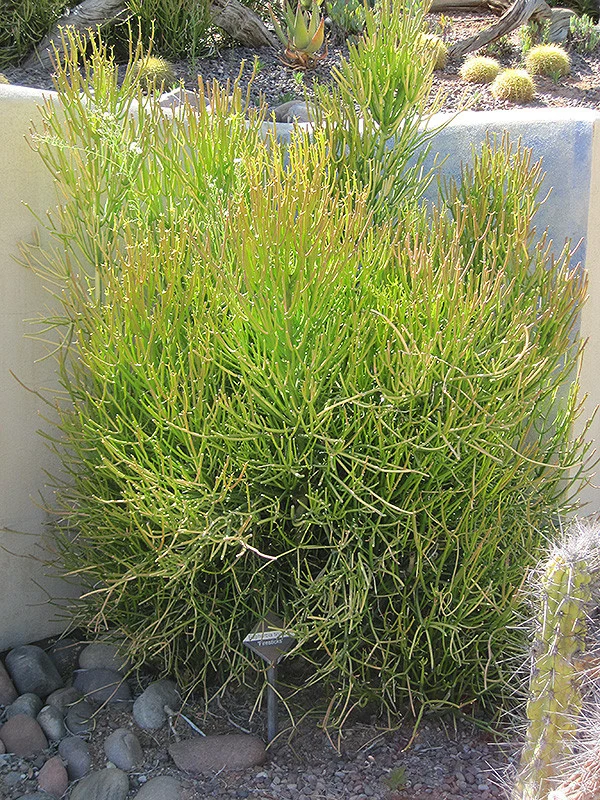
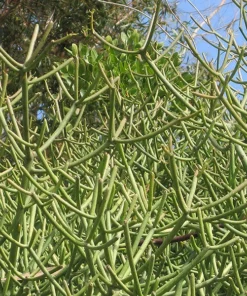
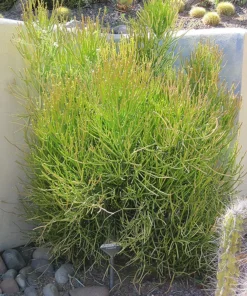
Pencil cactus (Euphorbia tirucalli) is an architectural succulent known for its dense network of slender, cylindrical green branches that resemble pencils. Its unusual, almost leafless form creates a striking silhouette that looks very different from conventional houseplants and true cacti.
Although commonly called pencil cactus, Euphorbia tirucalli is actually a member of the spurge family, Euphorbiaceae, rather than the cactus family. It can be maintained as a sculptural container plant or, in suitable warm climates, develop into a much larger woody shrub.
Explore our available pencil cactus for sale and add the unmistakable branching form of Euphorbia tirucalli to your succulent collection.
Euphorbia tirucalli — A Succulent, Not a True Cactus
The name “pencil cactus” is convenient, but botanically misleading.
Euphorbia tirucalli belongs to the genus Euphorbia and family Euphorbiaceae. True cacti belong to an entirely different plant family, Cactaceae.
The confusion is understandable.
Like many cacti, pencil cactus has evolved succulent stems capable of storing water and tolerating relatively dry conditions. Its reduced foliage and green stems also give it the appearance of a plant strongly adapted to conserving moisture.
But its botanical structure is distinctly Euphorbia.
One particularly important characteristic is the milky white latex produced when stems are damaged or cut. This sap can irritate skin and is especially hazardous around the eyes, making careful handling an important part of growing the plant.
Knowing that distinction helps buyers understand both how the plant grows and how it should be handled.
Why Pencil Cactus Looks So Unusual
The defining feature of Euphorbia tirucalli is its branching structure.
New growth consists of smooth, green, cylindrical branchlets approximately pencil-like in thickness. These branchlets develop in clusters from older growth, producing a dense network of narrow stems.
Leaves are small and temporary.
They appear primarily around young growth and are shed relatively quickly, leaving the green stems responsible for much of the plant’s visual character.
As the plant matures, older structural branches become thicker and woody while newer growth maintains the slender green appearance responsible for the common names pencil cactus, pencil tree, finger tree, and milkbush.
The result is an increasingly sculptural plant with strong vertical and branching lines rather than conventional leafy growth.
Choosing a Pencil Cactus
A pencil cactus changes considerably as it matures, so it helps to understand what you are selecting.
Look at the Branching
Young plants may have a relatively simple structure, while established specimens develop increasingly dense networks of cylindrical branches.
More branching creates a fuller appearance, but younger plants provide the opportunity to shape and develop the specimen over time.
Consider the Mature Plant
A small Euphorbia tirucalli should not be judged solely by its size at purchase.
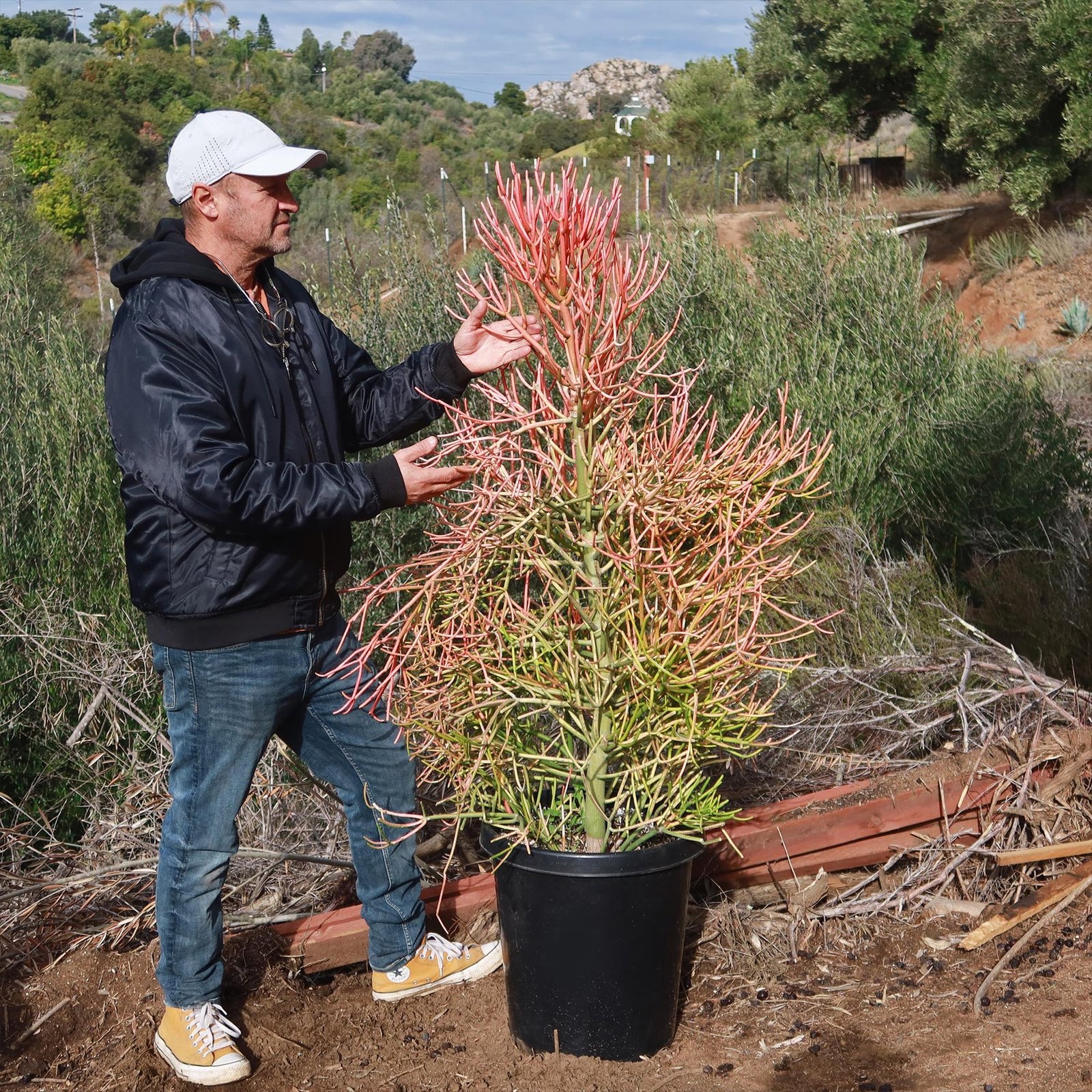
Under suitable conditions, this species can develop into a substantial woody shrub or small tree. Plants maintained indoors and in containers are generally much more manageable than mature specimens growing outdoors in favorable tropical or subtropical climates.
Confirm the Botanical Name
Because “pencil cactus” is a common name applied to more than one succulent, look for Euphorbia tirucalli when this is the plant you specifically want.
Check the Actual Product Details
Plant height, container size, number of branches, propagation method, maturity, and whether photographs show the exact specimen are inventory-specific characteristics.
These should be confirmed through the individual product listing rather than assumed from general information about the species.
A Strong Architectural Plant for Containers
Pencil cactus is particularly valuable when form matters.
Instead of broad leaves or thick cactus columns, it produces masses of narrow stems that create height, texture, and a strong silhouette without visually heavy foliage.
That makes it well suited to succulent collections where contrasting plant architecture is desirable.
Container cultivation also provides practical advantages.
It allows greater control over drainage, keeps the plant at a more manageable scale, and makes relocation possible when temperatures become unsuitable.
Because the plant can eventually become larger and more top-heavy, container stability becomes increasingly important as it matures.
How Large Can Pencil Cactus Grow?
Size depends heavily on where and how the plant is cultivated.
In favorable outdoor conditions, Euphorbia tirucalli can eventually become a large woody shrub or small tree. NC State reports potential heights of up to approximately 30 feet in its native habitat, while indoor plants are typically much smaller.
Container size, climate, pruning, light, and growing conditions all influence the plant’s eventual dimensions.
For buyers, the important point is that pencil cactus has substantial long-term growth potential even when purchased as a comparatively small plant.
Choose its location with future size in mind.
Pencil Cactus Care
Light
Euphorbia tirucalli performs well under strong light.
It can grow in bright indirect light as well as direct sun, although plants moved from sheltered conditions into substantially stronger sunlight should be acclimated gradually.
Adequate light helps maintain sturdy, compact growth.
Indoor growers should generally provide one of the brightest appropriate positions available.
Soil & Drainage
Pencil cactus requires good drainage.
Use a porous succulent growing medium that allows excess water to move away from the root system rather than remaining saturated for extended periods.
Containers should have functional drainage openings.
Good drainage becomes especially important indoors, where evaporation and soil drying can be slower than under hot outdoor conditions.
Watering
Euphorbia tirucalli is drought tolerant, but drought tolerance should not be interpreted as never needing water.
Allow the growing medium to dry appropriately between waterings and avoid keeping the root zone continuously wet.
Water demand changes with temperature, light, season, plant size, container size, and growing medium, so the condition of the plant and substrate is more useful than an inflexible calendar.
Overwatering can contribute to root rot.
Indoor or Outdoor Growing?
Pencil cactus works well as a container-grown houseplant where strong light is available.
Keeping the plant in a container makes its eventual size easier to manage and allows it to be moved according to seasonal conditions.
Outdoor cultivation is most appropriate in warm climates.
Euphorbia tirucalli is tropical to subtropical and does not have the broad cold tolerance found in some hardy North American cacti. NC State places its reliable winter hardiness primarily in USDA Zones 11–12, while noting survival in parts of southern Florida and California.
Growers in colder regions should therefore plan for protected or indoor cultivation when temperatures become unsuitable.
Important: Handle the Milky Sap Carefully
This is one characteristic every pencil cactus buyer should know before bringing the plant home.
Damaged or cut Euphorbia tirucalli stems release a milky latex sap.
The sap can irritate skin and may cause serious irritation or injury if it enters the eyes. Ingestion can also cause harmful effects. NC State recommends keeping the plant away from children and pets and wearing gloves when handling it.
For routine ownership:
- avoid unnecessary contact with the sap;
- wear protective gloves when pruning, repotting, or handling damaged stems;
- avoid touching your face or eyes while working with the plant;
- keep the plant where children and pets cannot chew or break the stems;
- wash exposed skin promptly if sap contact occurs.
If sap enters the eyes or the plant is ingested, seek appropriate medical assistance rather than treating the exposure as ordinary cactus irritation.
The presence of irritating latex does not prevent Euphorbia tirucalli from being cultivated ornamentally, but it does make thoughtful placement and careful handling essential.
Pruning & Managing Its Shape
As pencil cactus develops, pruning can help manage its dimensions and branching structure.
Because cutting stems releases latex, pruning requires more care than trimming many ordinary houseplants.
Wear gloves, protect skin and eyes, and keep freshly cut material away from children and pets.
Pruning can be particularly useful for container-grown specimens when branches become disproportionately long or the plant begins outgrowing its available space.
The objective is not necessarily to force a perfectly symmetrical plant. The irregular branching architecture is a major part of Euphorbia tirucalli’s ornamental character.
Natural Variation Between Pencil Cactus Plants
No two living specimens develop an identical branching pattern.
Individual plants can vary naturally in:
- overall height;
- number of branches;
- stem thickness;
- branching direction;
- green coloration;
- woody development on older stems;
- minor cosmetic markings;
- overall symmetry.
Environmental conditions can also affect appearance.
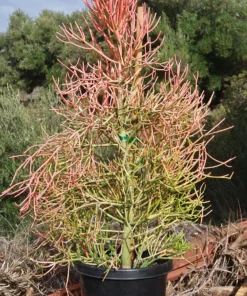
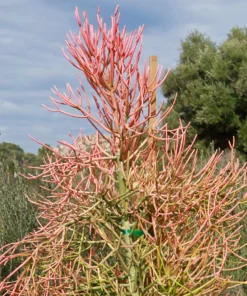
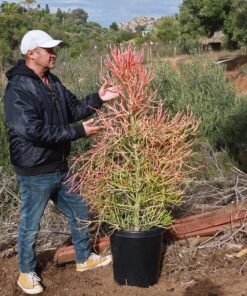
Product-specific characteristics such as exact height, pot size, number of branches, rooting status, propagation method, and whether photographs represent the exact plant should therefore be confirmed from the individual listing.
A Succulent With an Unmistakable Silhouette
Pencil cactus does not need flowers, broad foliage, or conventional cactus spines to make an impression.
Its appeal lies in its structure.
Hundreds of narrow green stems can eventually create a dense, sculptural framework, while older woody growth gives mature specimens greater depth and character.
For succulent collectors looking for a plant with strong architectural form, drought tolerance, container-growing potential, and an appearance unlike typical cacti, Euphorbia tirucalli offers a compelling choice.
The key is knowing what you are buying: a Euphorbia rather than a true cactus, a plant capable of substantial growth, and a species whose latex requires responsible handling.
Explore our available pencil cactus plants and choose a Euphorbia tirucalli suited to your collection and growing space.
Frequently Asked Questions About Pencil Cactus
What is the scientific name of pencil cactus?
The plant commonly sold as pencil cactus is Euphorbia tirucalli, a succulent member of the spurge family, Euphorbiaceae.
Is pencil cactus actually a cactus?
No. Despite its common name and cactus-like appearance, Euphorbia tirucalli is not a member of the cactus family. It belongs to Euphorbiaceae.
Why is it called pencil cactus?
The common name comes from its numerous narrow, cylindrical green branchlets, which resemble pencils in thickness and shape.
How large does pencil cactus grow?
Size depends greatly on cultivation. Outdoor plants in favorable warm climates can eventually become large woody shrubs or small trees, while container-grown indoor specimens are generally maintained at considerably smaller dimensions.
Can pencil cactus grow indoors?
Yes. Euphorbia tirucalli can be grown indoors as a container plant when provided with strong light, appropriate watering, good drainage, and sufficient growing space.
Does pencil cactus need full sun?
The species tolerates and generally performs well with strong light, including direct sun. Plants previously grown under sheltered conditions should be acclimated gradually before receiving much stronger exposure.
Is pencil cactus sap poisonous?
Its milky latex is irritating and potentially harmful. It can cause skin irritation and can be particularly dangerous if it enters the eyes; ingestion is also unsafe. Avoid direct contact and keep the plant appropriately separated from children and pets.
Is pencil cactus safe around pets?
Because damaged stems release irritating latex and ingestion is unsafe, pencil cactus should be positioned where pets cannot chew or break the plant.
Why does my pencil cactus have so few leaves?
Tiny leaves can appear on young growth but are normally shed quickly. The plant’s green cylindrical stems perform much of the photosynthetic work, so a largely leafless appearance is normal for Euphorbia tirucalli.
| Size | 12 inch, 4" Pot, 6" Pot, 5 Gal, 10 Gal, 20 Gal |
|---|
Be the first to review “Pencil Cactus For Sale”
Related products
Cactus for sale
Cactus for sale
Cactus for sale
Cactus for sale
Cactus for sale
Boobie Cactus -Myrtillocactus geometrizans fukurokuryuzinboku
Cactus for sale
Cactus for sale
Reviews
There are no reviews yet.