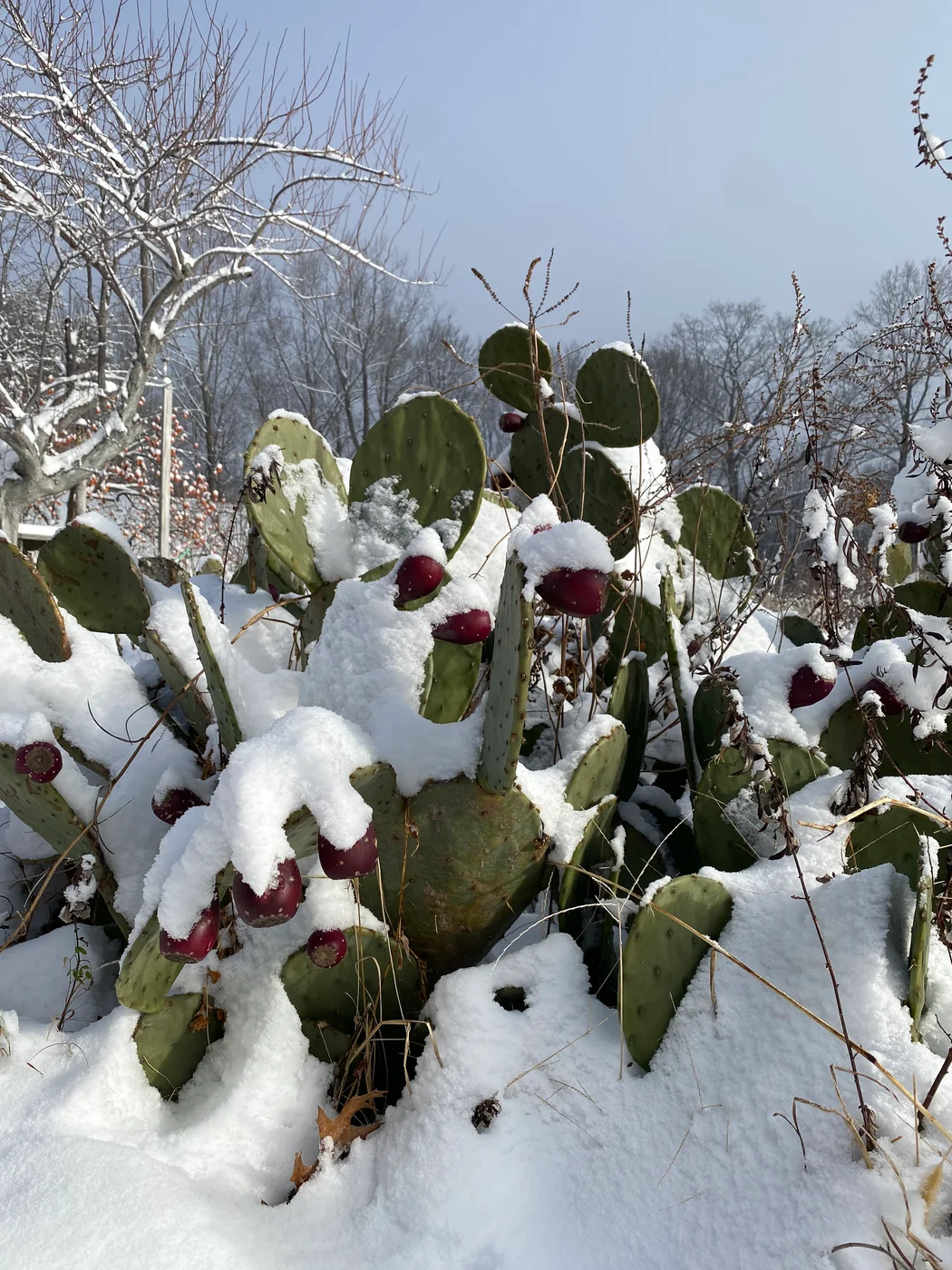
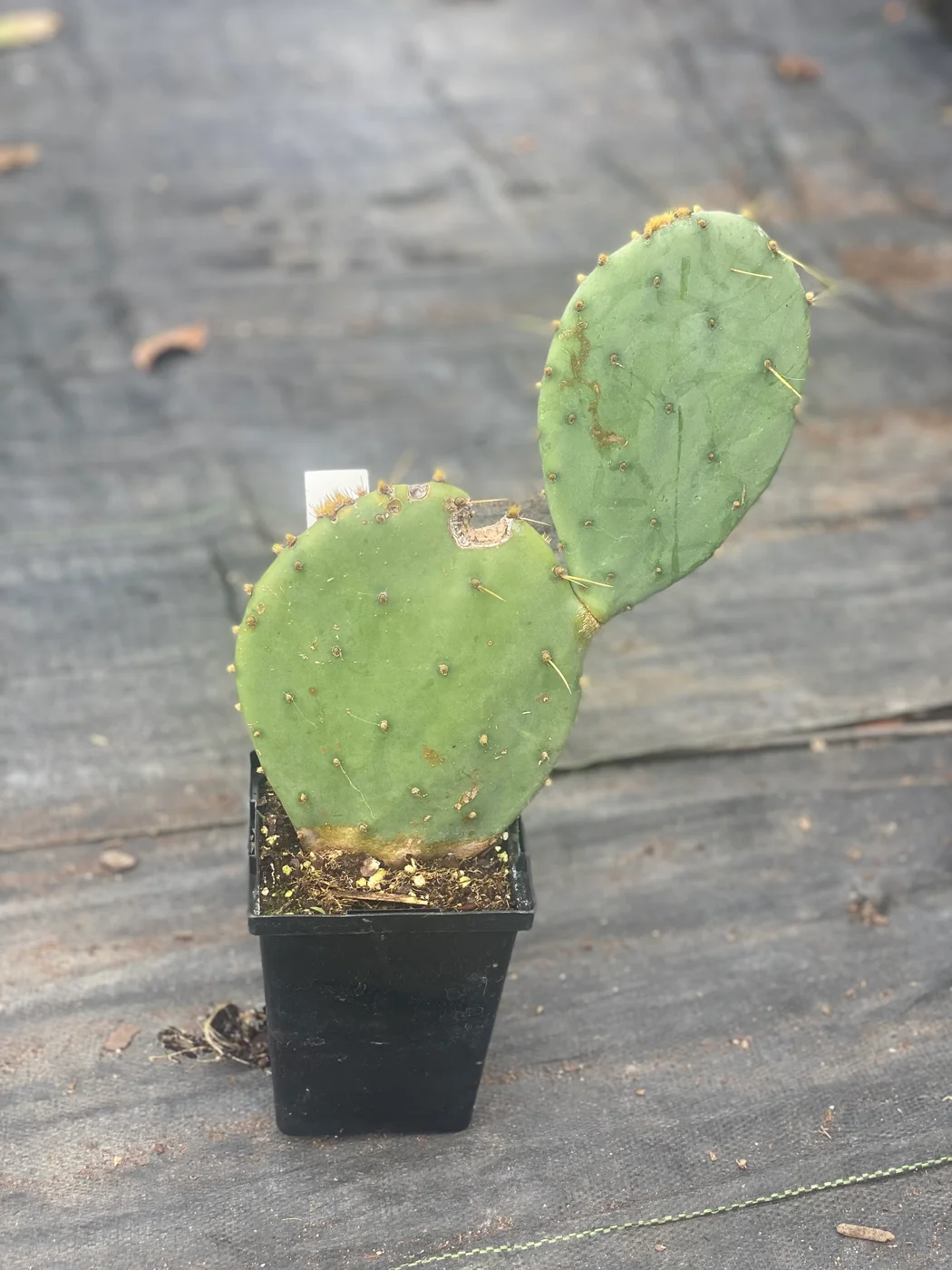
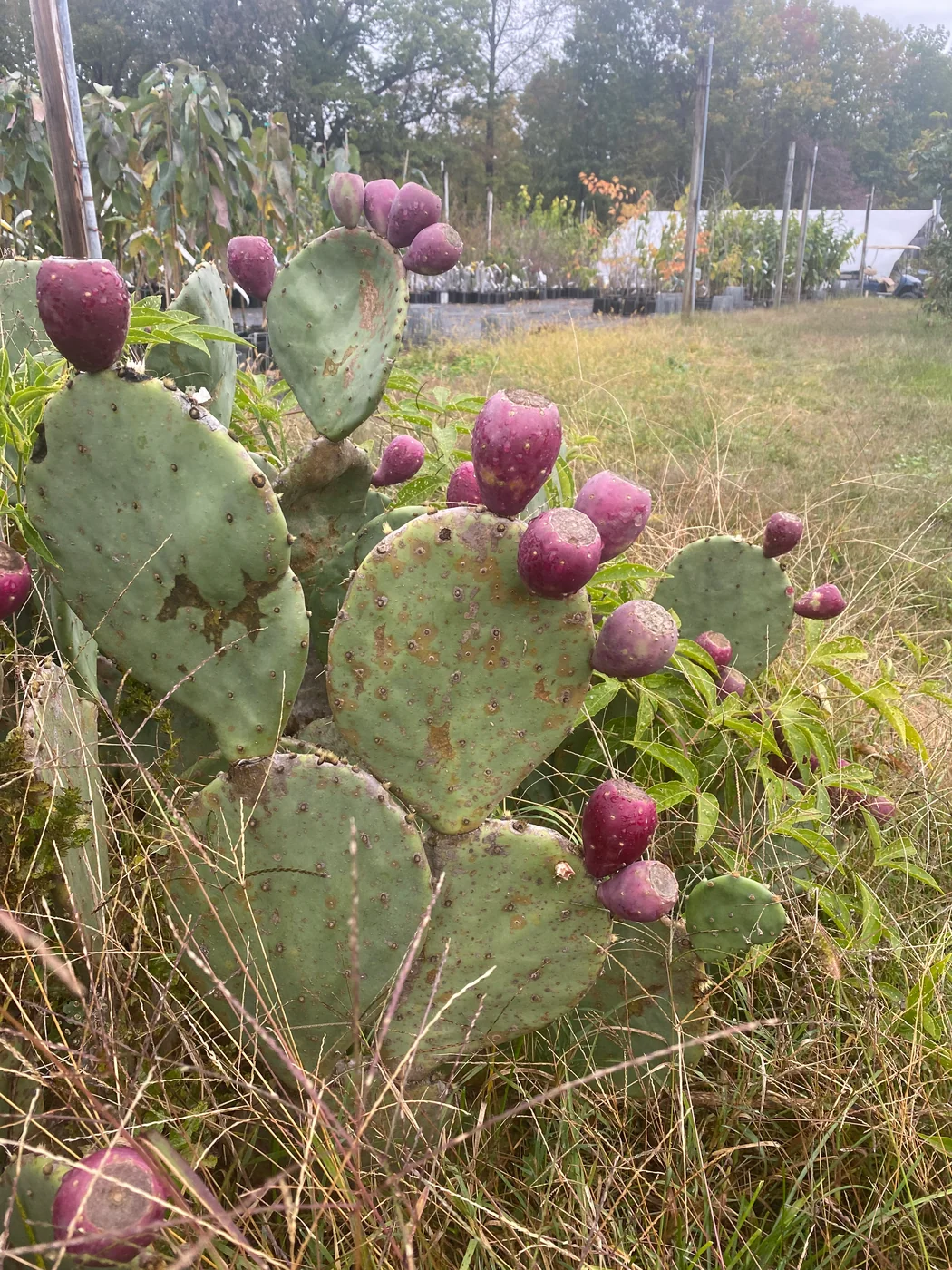
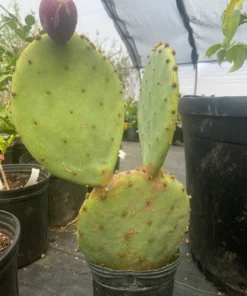
Prickly Pear Cactus for Sale
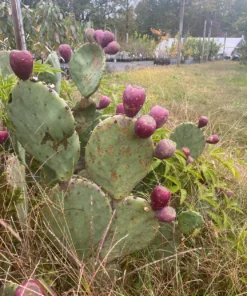
Prickly pear cactus is one of the most recognizable groups of cacti in the Americas, known for its broad flattened pads, distinctive areoles, colorful flowers, and—in many species—fleshy fruits. Belonging primarily to the genus Opuntia, prickly pears range from compact spreading plants to substantial shrubby specimens suitable for bold landscape planting.
The right plant depends on more than appearance. Cold tolerance, mature size, pad color, spination, flowers, fruiting characteristics, and growth habit can differ considerably between species and cultivars.
Explore our available prickly pear cactus for sale and choose an Opuntia suited to your collection, container garden, xeriscape, or landscape.
Prickly Pear Is More Than One Cactus
Prickly pear is a common name applied to numerous species within the genus Opuntia, part of the cactus family, Cactaceae.
That distinction is important when buying one.
There is no single prickly pear with one universal mature size, flower color, spine pattern, or climate requirement. Different Opuntia species have adapted to environments ranging from hot, arid regions to areas that experience significant winter cold.
Some remain relatively low and spreading. Others form large clumps or substantial shrubby growth.
Rather than treating every prickly pear as interchangeable, choose according to the characteristics of the identified species or cultivar.
How to Recognize a Prickly Pear Cactus
The most obvious characteristic is its flattened, jointed growth.
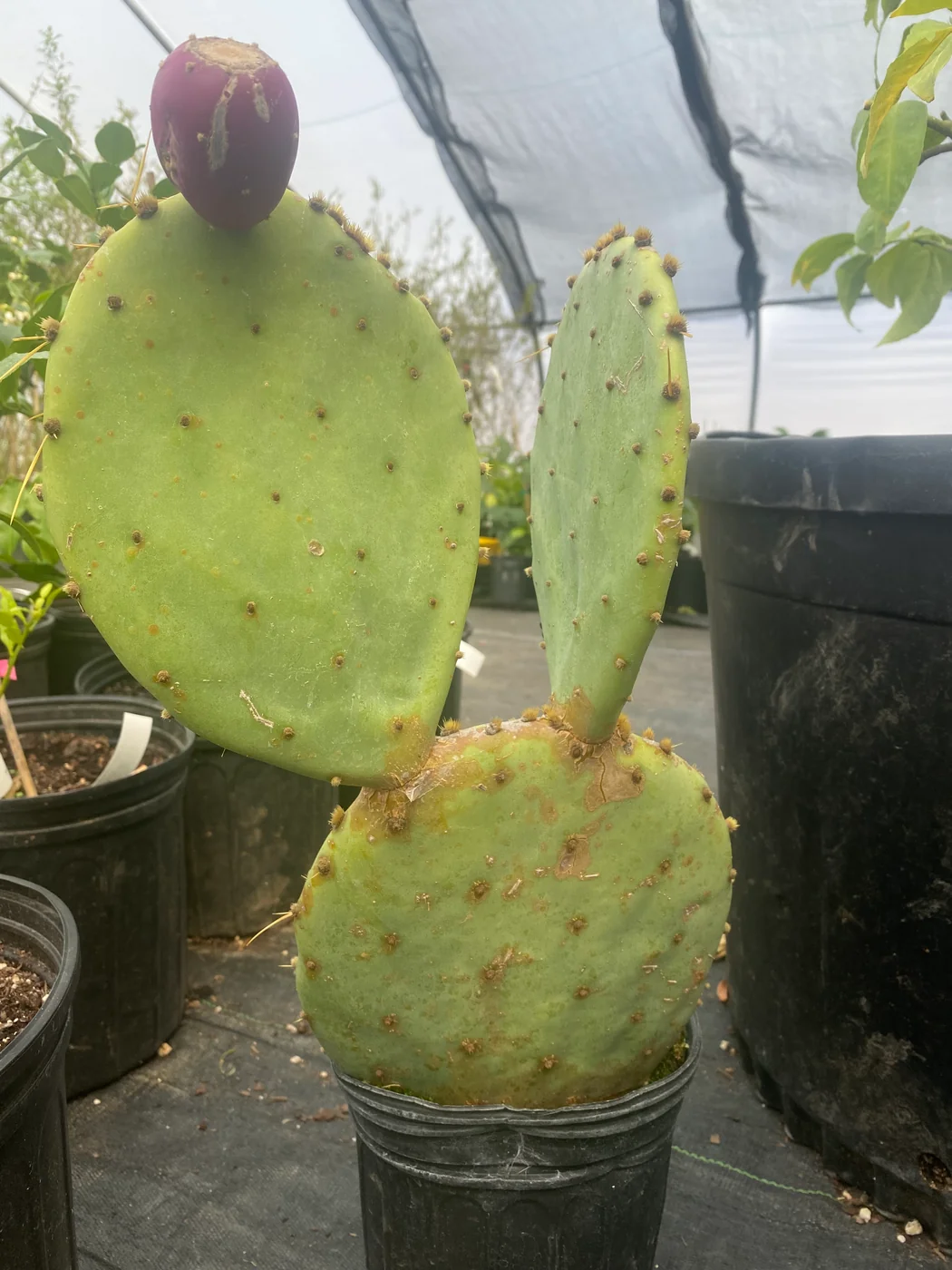
These structures are commonly called pads, although botanically they are modified stems known as cladodes. The pads carry out photosynthesis, store water, and produce new growth from their areoles.
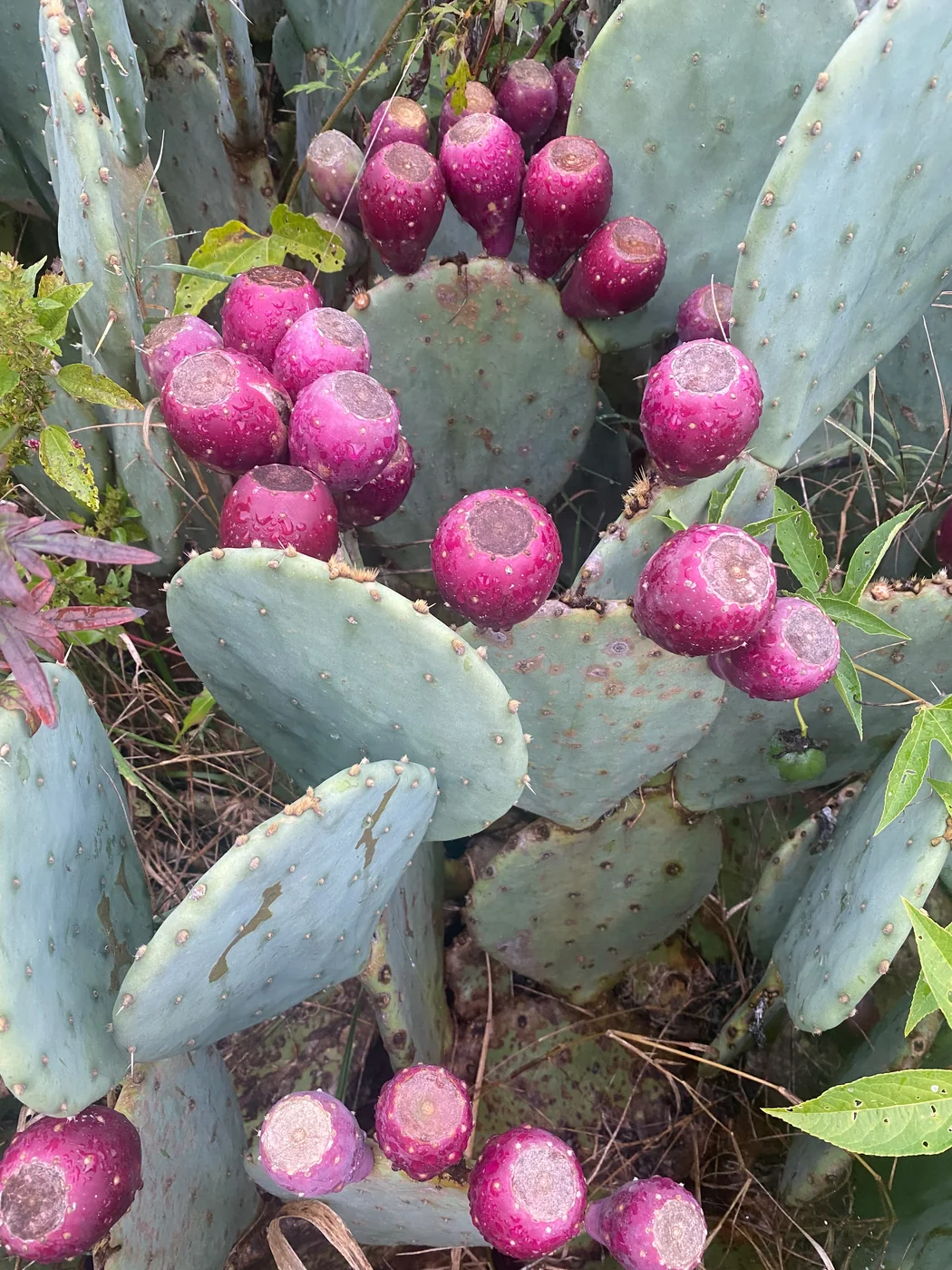
Depending on the plant, pads may be rounded, oval, elongated, green, blue-green, gray-green, or capable of developing purple tones under certain conditions.
Distributed across each pad are small structures called areoles.
The areoles can produce conventional cactus spines as well as tiny barbed bristles known as glochids—one of the most important characteristics to understand before handling an Opuntia.
Choosing the Right Prickly Pear Cactus
The best prickly pear is the one whose characteristics match where and how you intend to grow it.
Choose by Climate
Do not assume every prickly pear requires a hot desert climate.
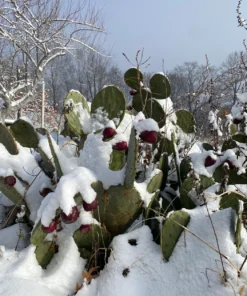
Some North American Opuntia species tolerate substantial winter cold, while others are better suited to warmer conditions.
If the plant will remain outdoors year-round, determine the cold tolerance of the specific species or cultivar rather than relying on general information about prickly pears.
Choose by Growth Habit
Consider the mature plant, not simply the size being purchased.
Some prickly pears remain relatively compact, while others spread outward, form broad clumps, or develop into substantial shrubs.
Compact forms can work well in containers and smaller gardens. More vigorous species can become impressive structural plants where sufficient landscape space is available.
Choose by Spination
Spination differs considerably across Opuntia.
Some species carry prominent long spines, while selected forms have greatly reduced conventional spination.
Plants described as spineless, however, may still carry glochids. These tiny barbed bristles can detach easily and irritate skin.
For planting near patios, paths, pets, or frequently used garden areas, spine and glochid characteristics deserve particular consideration.
Choose by Color & Ornamental Character
Prickly pears offer more visual diversity than their familiar green pads suggest.
Depending on species and cultivar, plants can display blue-green, gray-green, deep green, or purple-toned pads along with flowers in yellow, orange, red, pink, purple, and related shades.
If a particular pad or flower color is important, select an identified variety rather than assuming all prickly pears will develop the same appearance.
Before Choosing Your Prickly Pear
A product name alone does not tell you everything you need to know.
Before selecting a plant, consider:
- Species or cultivar — determines many of the plant’s fundamental characteristics.
- Mature size — particularly important for permanent landscape planting.
- Cold tolerance — essential if the cactus will remain outdoors through winter.
- Spines and glochids — relevant to handling and planting location.
- Growth habit — compact, spreading, clumping, or shrubby.
- Pad and flower characteristics — useful when ornamental appearance is a priority.
- Intended use — container specimen, xeriscape, landscape feature, or an identified fruit-producing selection.
These factors are considerably more useful than choosing an Opuntia simply because it is labeled “prickly pear.”
Spines, Glochids & Spineless Varieties
The difference between spines and glochids deserves particular attention.
Spines are the larger, more obvious structures found on many cactus species.
Glochids are much smaller, finely barbed structures produced from Opuntia areoles. Because they detach easily, they can become embedded in skin even when a plant appears relatively harmless.
This is why reduced-spine or so-called spineless prickly pears should still be handled carefully.
Use suitable gloves or tools when handling an unfamiliar plant, particularly during repotting, propagation, or landscape installation.
Flowers & Prickly Pear Fruit
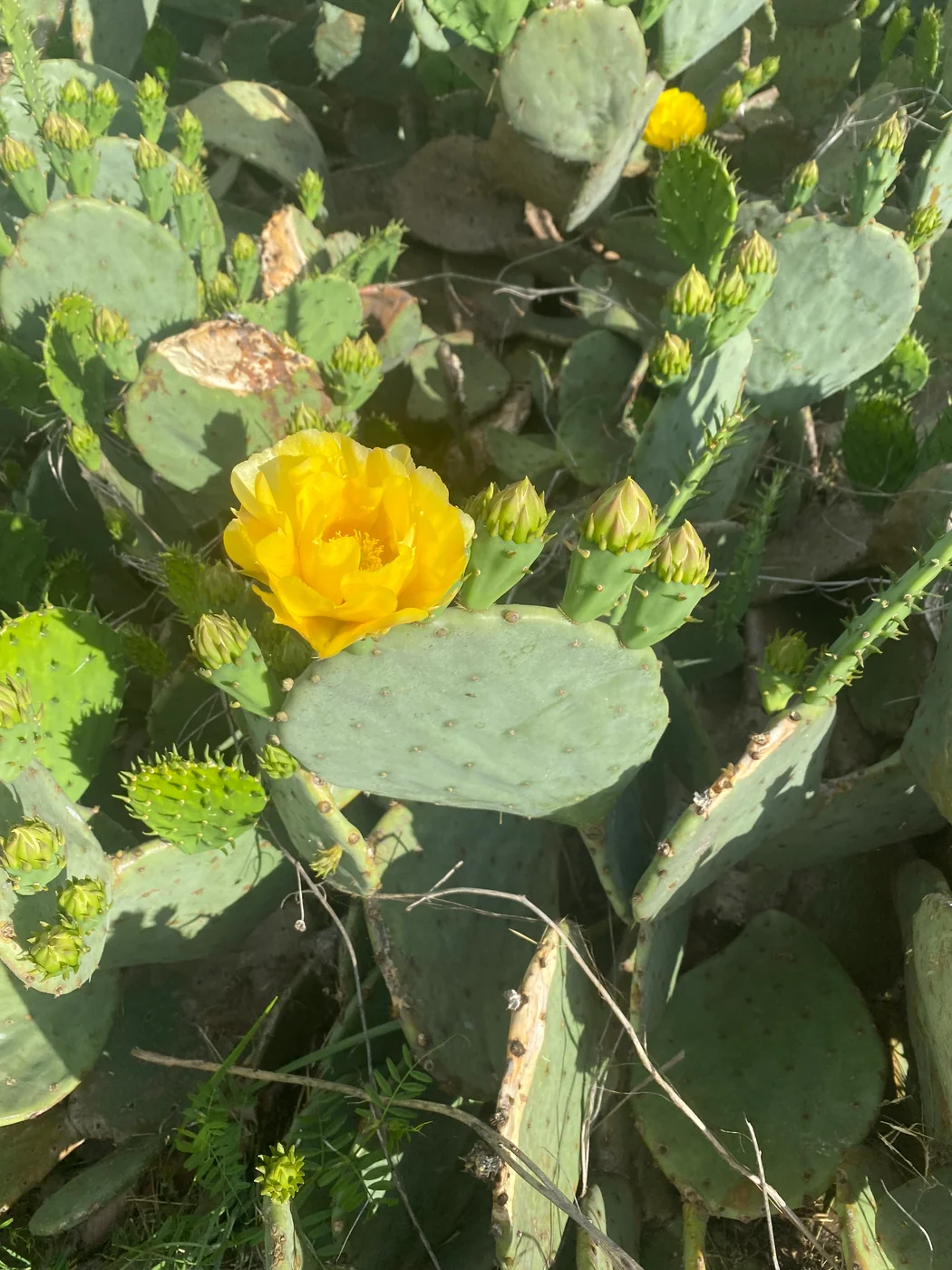
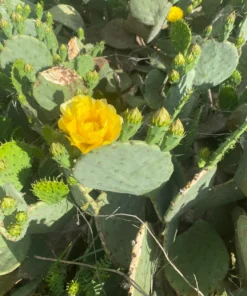
Mature prickly pears can produce exceptionally showy flowers.
Color depends on species and cultivar, with yellow, orange, red, pink, purple, and intermediate shades occurring across the genus. Flowers generally develop around the edges or upper portions of mature pads, creating a striking contrast with the structural growth.
Many Opuntia species subsequently produce fleshy fruits commonly called prickly pears or tunas.
Certain species and cultivars are also cultivated for edible fruits or young pads known as nopales.
However, fruit quality, pad characteristics, productivity, and culinary suitability differ between plants. If food production is the objective, choose a properly identified Opuntia intended for that purpose rather than assuming every ornamental prickly pear offers the same characteristics.
How to Grow Prickly Pear Cactus
Prickly pears are widely associated with resilient, drought-adapted landscapes, but good cultivation still depends on matching conditions to the particular plant.
Light
Most commonly cultivated Opuntia perform best with abundant sunlight.
Strong light encourages compact growth and supports flowering. Young, newly propagated, or previously sheltered plants should be acclimated gradually before receiving substantially stronger direct exposure.
Soil & Drainage
Excellent drainage is fundamental.
Many prickly pears naturally grow in rocky, sandy, gravelly, or otherwise freely draining environments. In cultivation, avoid locations where water remains around the root system for extended periods.
Container plants should be grown in an appropriately porous medium with functional drainage openings.
Watering
Established Opuntia can be highly drought tolerant, but that does not mean they never require water.
Actual needs depend on species, temperature, rainfall, season, plant size, growing medium, and whether the cactus is container-grown or established in the landscape.
Water according to growing conditions rather than an inflexible calendar, and avoid keeping the root zone continuously saturated.
Growing Prickly Pear in Containers
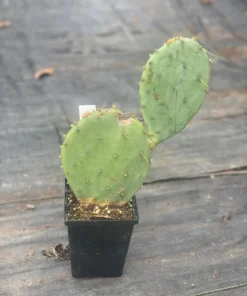
Many prickly pears adapt well to container cultivation.
A pot can provide greater control over drainage, placement, and seasonal protection while making smaller Opuntia suitable for patios and cactus collections.
Choose a stable container with adequate drainage and enough room for the plant’s growth habit.
This becomes increasingly important as new pads develop. Some varieties become broad or top-heavy with age, while spreading forms may eventually require more horizontal space than expected from the original plant.
Repot according to actual plant and root development rather than placing a small specimen immediately into an unnecessarily large container.
Prickly Pear for Xeriscapes & Landscapes
Few cacti create the same repeating architectural pattern as a mature Opuntia.
Its pads work particularly well in xeric gardens, rock gardens, dry borders, slopes, and Southwestern-inspired landscapes, where the plant can provide structure even when it is not flowering.
Placement should account for mature spread and spination.
Some species expand into substantial clumps, and pads that contact suitable soil can root in certain Opuntia. Heavily spined selections are generally better positioned away from narrow walkways and frequently used spaces.
Selecting both the right variety and the right location produces a better long-term result.
Natural Variation Between Prickly Pear Plants
Prickly pears are living plants, and variation is normal.
Individual specimens can differ in pad dimensions, number of pads, growth direction, coloration, spine development, and minor surface markings.
Differences become even greater between species and cultivars.
A cold-hardy Eastern prickly pear should not automatically be expected to grow like a larger Southwestern species, just as a purple ornamental selection should not be assumed to behave like a variety selected primarily for fruit production.
Exact plant size, species or cultivar, rooted status, number of pads, propagation method, container size, and whether photographs represent the individual specimen should therefore be confirmed through the specific product option.
Discover the Diversity of Opuntia
Prickly pear may be immediately recognizable, but Opuntia is far more diverse than its familiar paddle-shaped silhouette suggests.
The genus includes compact container specimens, cold-hardy North American cacti, dramatically spined landscape plants, colorful ornamental selections, and varieties cultivated for fruit or pads.
Choosing successfully means looking beyond the common name.
Consider botanical identity, mature growth habit, climate suitability, spination, ornamental characteristics, and where the plant will ultimately grow.
That gives you a prickly pear selected for a purpose—not simply another cactus.
Explore our available prickly pear cactus plants and find the Opuntia variety that fits your collection or landscape.
Frequently Asked Questions About Prickly Pear Cactus
What is the scientific name of prickly pear cactus?
Prickly pear generally refers to numerous species within the genus Opuntia. Because the common name applies to multiple species, there is no single species name that accurately identifies every prickly pear.
Are all prickly pear cacti the same?
No. Opuntia species and cultivars differ in mature size, growth habit, cold tolerance, spination, pad coloration, flowers, fruit, and landscape performance.
Does prickly pear cactus have spines?
Many prickly pears produce visible spines, although the number and size vary. Even reduced-spine or spineless forms may carry tiny barbed glochids that can irritate skin.
Can prickly pear survive cold weather?
Some Opuntia species are remarkably cold hardy, while others require warmer conditions. Determine cold tolerance from the specific species or cultivar rather than assuming all prickly pears have the same hardiness.
Can prickly pear cactus grow in a pot?
Yes. Many prickly pears grow well in containers when provided with abundant light, excellent drainage, an appropriately sized pot, and watering suited to their growing conditions.
Does prickly pear cactus flower?
Yes. Mature Opuntia can produce prominent flowers, with color varying according to species and cultivar. Suitable light and growing conditions help support flowering.
Does prickly pear produce fruit?
Many species produce fleshy fruits after flowering. These fruits are commonly called prickly pears or tunas, although size, color, quality, and productivity vary between different Opuntia.
Is prickly pear cactus edible?
The fruits and young pads of certain Opuntia species and cultivars have established culinary uses. However, not every ornamental plant should automatically be treated as a food crop. Choose a correctly identified variety intended for culinary use if edible fruit or pads are your objective.
| Size | Quart, TG/1 Gallon |
|---|
Be the first to review “Prickly Pear Cactus”
Related products
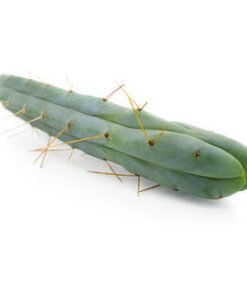
Bolivian Torch Cactus
Cactus for sale
Cactus for sale
Cactus for sale
SAN PEDRO / 30GR AT 1KG / – (TRICHOCEREUS / ECHINOPSIS PACHANOI) HUACHUMA – CAPTUS POWDER
Cactus for sale
Cactus for sale
Cactus for sale
San Pedro Pachanoi (Trichocereus) In Pot Large 25 CM – 40 CM
Reviews
There are no reviews yet.