Boobie Cactus For Sale
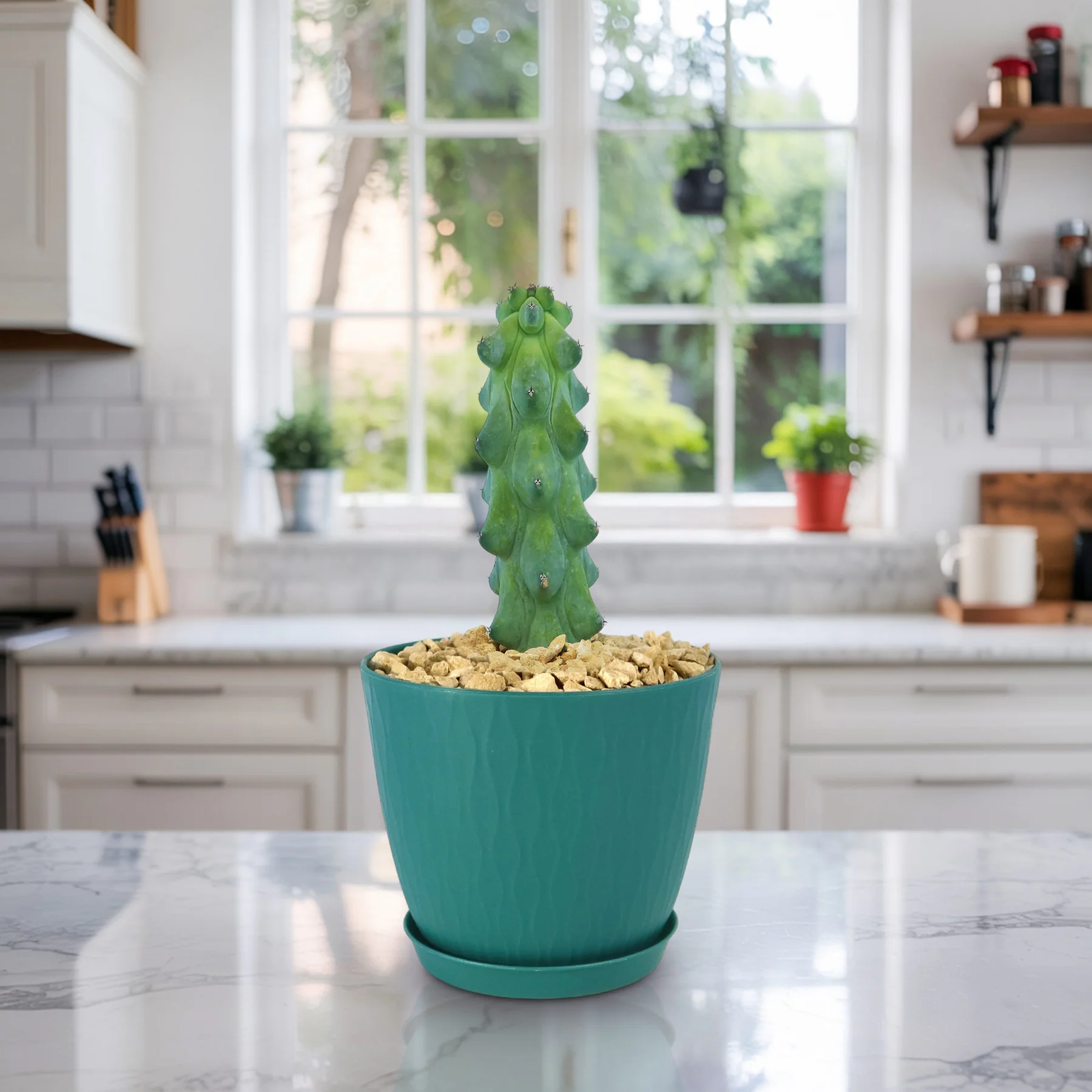
The Boobie Cactus (Myrtillocactus geometrizans ‘Fukurokuryuzinboku’) is a remarkable monstrose cactus recognized by the rounded, breast-like protrusions that develop along its blue-green stems. Rather than forming the regular ribs associated with the typical species, this cultivated form produces irregular curves and swollen growth that give every section of the stem a sculptural appearance.
Its combination of unusual geometry, blue-green coloration, and unpredictable growth has made Boobie Cactus particularly sought after by collectors of distinctive cactus forms.
For growers looking for something far removed from an ordinary columnar cactus, this is a plant whose character becomes more pronounced as it develops.
What Exactly Is a Boobie Cactus?
Boobie Cactus is a cultivated monstrose form associated with Myrtillocactus geometrizans.
The parent species is a columnar cactus native to Mexico, but ‘Fukurokuryuzinboku’ develops very differently from the conventional form.
Instead of maintaining evenly defined ribs, its growth is distorted into a repeating series of rounded projections. Areoles and short spines emerge around these swollen sections, creating the characteristic appearance responsible for the plant’s memorable common name.
This unusual structure is the defining feature of the cultivar.
It is therefore more accurate to identify the plant as:
Myrtillocactus geometrizans ‘Fukurokuryuzinboku’
rather than treating “Boobie Cactus” as its own botanical species.
Why Does Boobie Cactus Have Its Unusual Shape?
The strange shape is the result of monstrose growth.
In monstrose cacti, normal stem development becomes irregular. Instead of following the predictable rib structure of the standard species, growing tissue produces distorted forms.
In ‘Fukurokuryuzinboku’, that irregular development creates the rounded protrusions for which the cultivar is known.
This also means the plant should not be expected to look perfectly symmetrical.
One section may be strongly pronounced while another is flatter. New growth can develop its own arrangement of curves, bumps, areoles, and spines.
That unpredictability is part of the plant’s appeal.
How to Recognize a Boobie Cactus
Several characteristics help distinguish this cultivar:
- blue-green to glaucous stem coloration;
- upright columnar growth;
- irregularly swollen ribs;
- rounded breast-like projections;
- areoles positioned around the protruding growth;
- relatively sparse spination compared with many heavily armed columnar cacti;
- increasingly irregular form as the stem develops.
The most important characteristic is not simply the blue color.
Ordinary Myrtillocactus geometrizans can also produce attractive blue-green stems.
It is the combination of that coloration with the characteristic monstrose protrusions that identifies the cultivated form commonly known as Boobie Cactus.
Boobie Cactus vs. Regular Myrtillocactus geometrizans
The difference becomes obvious when the two growth forms are compared.
Typical Myrtillocactus geometrizans develops comparatively regular columnar stems with defined ribs.
The Boobie Cactus cultivar disrupts that regular geometry.
Its stem surface develops rounded, irregular projections rather than maintaining the conventional rib structure of the parent plant.
Both share the same species background, but visually they can appear dramatically different.
This distinction matters when purchasing because a standard Myrtillocactus geometrizans should not be marketed as a Boobie Cactus simply because it has blue-green stems.
The monstrose growth pattern is the defining feature buyers should look for.
Choosing a Boobie Cactus
Because this cultivar grows irregularly, selecting a plant is partly about deciding what kind of specimen appeals to you.
Look at the Shape
Some plants develop strongly pronounced rounded projections, while others may have subtler or more irregular contours.
There is no requirement for every protrusion to look identical.
In fact, excessive uniformity would be contrary to the natural character of monstrose growth.
Consider the Height
A smaller plant provides the opportunity to watch its unusual form develop over time.
A more established specimen offers greater immediate visual impact and usually displays more of the characteristic monstrose structure.
Examine the Color
Healthy growth can display attractive blue-green or glaucous tones.
Color intensity can vary with growing conditions, maturity, and the natural waxy surface of the plant.
Consider the Growing Space
Although the cultivar develops differently from ordinary Myrtillocactus geometrizans, it remains an upright-growing cactus.
Allow sufficient vertical space for continued development and choose a stable container as the plant becomes taller and heavier.
Confirm the Actual Plant Details
Exact height, container size, rooting status, propagation method, number of stems, current condition, and whether photographs show the exact specimen are inventory-specific details.
These should be confirmed from the individual product listing rather than assumed from the cultivar name.
Blue-Green Color & Sculptural Growth
Shape may attract the most attention, but coloration is another major ornamental feature.
Myrtillocactus geometrizans is known for attractive blue-green stems, and that coloration provides an excellent background for the exaggerated geometry of ‘Fukurokuryuzinboku’.
Depending on growing conditions and the individual plant, the surface can develop a muted blue, blue-green, or gray-green appearance.
Avoid unnecessarily rubbing the stem surface.
The attractive appearance of many blue or glaucous cacti comes partly from their natural surface coating, and repeated handling can leave visible marks.
For display, the combination of cool stem coloration and irregular sculptural growth is what gives Boobie Cactus such a recognizable presence.
How to Grow Boobie Cactus
Despite its unusual appearance, its fundamental requirements remain those of a drought-adapted cactus.
Light
Provide abundant light.
Strong light helps maintain compact, sturdy development and supports the characteristic coloration and form of the plant.
Indoor specimens generally benefit from one of the brightest appropriate positions available.
However, a cactus previously grown under filtered or protected conditions should not be moved immediately into intense direct sunlight.
Increase exposure gradually to reduce the risk of sun damage.
Soil & Drainage
Excellent drainage is essential.
Use a porous cactus growing medium that allows excess moisture to move efficiently away from the root system.
The container should have functional drainage openings.
A decorative pot without adequate drainage can undermine even an otherwise appropriate cactus soil mixture.
Watering
Allow the growing medium to dry appropriately between waterings.
Boobie Cactus should not remain continuously wet.
How quickly the substrate dries depends on temperature, light, airflow, container size, soil composition, season, and plant size, so watering according to actual conditions is more reliable than following a fixed weekly schedule.
During cooler periods or slower growth, water demand generally decreases.
The objective is a healthy wet-to-dry cycle without prolonged saturation around the roots.
Growing Boobie Cactus Indoors
Boobie Cactus can make an exceptional indoor specimen when adequate light is available.
Its vertical form occupies relatively little horizontal space compared with sprawling or heavily branching cacti, while its unusual stem structure gives it considerable visual presence.
A bright window, sunroom, greenhouse, or dedicated high-light plant area can provide an appropriate setting.
Indoor growers should pay particular attention to drainage and watering.
Soil can remain moist considerably longer indoors than it does under hot, sunny outdoor conditions, particularly during cooler seasons.
The plant’s appearance may be unusual, but its roots still benefit from the same fundamental principle that applies to many desert cacti: avoid prolonged waterlogging.
Outdoor Growing
Boobie Cactus can also be grown outdoors where climate and seasonal conditions are appropriate.
Strong light, warmth, airflow, and excellent drainage can support healthy growth.
Cold requires greater caution.
The parent species originates from Mexico and is associated with dry environments rather than climates characterized by prolonged freezing conditions.
Growers in colder regions can maintain the plant in a container so it can be moved into protection as temperatures decline.
When transitioning an indoor-grown plant outside, gradually introduce stronger sunlight rather than immediately placing it in intense exposure.
Why Every Boobie Cactus Looks Different
Uniformity is not the goal with this plant.
The monstrose growth responsible for its unusual appearance naturally creates variation from specimen to specimen.
Individual plants can differ in:
- prominence of the rounded projections;
- spacing between protrusions;
- overall stem thickness;
- height;
- blue-green coloration;
- spine development;
- number of growing points;
- overall symmetry;
- minor cosmetic markings.
Even different sections of the same cactus can develop differently.
For collectors, this makes individual form especially important when choosing a specimen.
If a product listing uses photographs of the exact plant, those images can be particularly valuable because the shape of one Boobie Cactus cannot be assumed from another.
A Cactus Defined by Imperfection
Many columnar cacti are appreciated for symmetry.
Boobie Cactus is interesting for almost the opposite reason.
Its identity comes from distorted growth—rounded sections interrupting normal ribs, asymmetrical contours developing along the stem, and new growth continuing a pattern that is recognizable without becoming perfectly predictable.
That gives an established specimen the appearance of a living sculpture rather than a conventional cactus column.
The blue-green surface makes the geometry even more noticeable, while the upright habit allows the plant to become increasingly prominent without losing the strange form that makes the cultivar desirable.
For collectors interested in unusual cactus morphology, monstrose growth, and plants that become more individual with age, Myrtillocactus geometrizans ‘Fukurokuryuzinboku’ deserves a place well beyond novelty status.
Choose a Boobie Cactus for its unmistakable form, blue-green character, and the opportunity to grow a specimen that becomes increasingly individual over time.
Frequently Asked Questions About Boobie Cactus
What is the scientific name of Boobie Cactus?
Boobie Cactus is commonly identified in horticulture as Myrtillocactus geometrizans ‘Fukurokuryuzinboku’. It is a monstrose cultivated form associated with Myrtillocactus geometrizans rather than a separate cactus species.
Why is it called Boobie Cactus?
The common name refers to the rounded protrusions that develop along the stem. These unusual swellings create the breast-like appearance associated with the cultivar.
Is Boobie Cactus naturally shaped like this?
The unusual shape results from monstrose growth that alters normal stem development. This produces the irregular projections and distorted ribs characteristic of the cultivar.
Is every Boobie Cactus shaped the same?
No. Monstrose growth is naturally irregular, so the prominence, spacing, and arrangement of the rounded projections can differ considerably between individual plants.
Is Boobie Cactus the same as regular Myrtillocactus geometrizans?
They share the same species background, but they have different growth forms. Standard Myrtillocactus geometrizans develops more conventional ribbed columns, while ‘Fukurokuryuzinboku’ produces the irregular rounded growth associated with Boobie Cactus.
Can Boobie Cactus grow indoors?
Yes. It can be maintained as a container-grown indoor cactus when given abundant light, excellent drainage, appropriate watering, and enough vertical space.
How often should I water Boobie Cactus?
There is no universal watering interval. Allow the growing medium to dry appropriately between waterings and adjust frequency according to light, temperature, season, container size, and soil conditions.
Why is my Boobie Cactus blue-green?
Blue-green or glaucous coloration is characteristic of Myrtillocactus geometrizans. The intensity can vary among plants and according to growing conditions.
Should I touch the blue surface of my Boobie Cactus?
Unnecessary rubbing is best avoided. Handling can leave visible marks on the natural surface coating responsible for part of the cactus’s attractive glaucous appearance.
| Size | 4" Pot, 6" Pot, 5 Gal |
|---|
Be the first to review “Boobie Cactus -Myrtillocactus geometrizans fukurokuryuzinboku”
Related products

Cactus for sale
SAN PEDRO / 30GR AT 1KG / – (TRICHOCEREUS / ECHINOPSIS PACHANOI) HUACHUMA – CAPTUS POWDER
Cactus for sale
Cactus for sale
Bolivian Torch Cactus
Cactus for sale

Cactus for sale
YOPO – VILCA SEEDS / 200gr at 1kg – (Anadenanthera Peregrina) 100% Pure Natural and Organic
Cactus for sale
Trichocereus pachanoi – cristata (San Pedro) In soil – Small
Reviews
There are no reviews yet.